Xiamen TJ Metal Material Co., Ltd. (referred to as TJ Company) was established in 2009 and is now an important private backbone enterprise in Fujian Province, headquartered in Xiamen City, Fujian Province.
Graphite Foams – Professional Material Introduction
Graphite foams are advanced, lightweight, and highly conductive porous carbon materials engineered for applications requiring exceptional thermal management, structural integrity, and chemical stability. As a threedimensional network composed primarily of graphitic carbon, graphite foams offer a unique combination of low density, high thermal conductivity, and large surface area, making them valuable in nextgeneration energy systems, aerospace structures, electronic cooling devices, and compositematerial design. Their unusual properties derive from the synergy between graphitic microstructures and interconnected opencell porosity.
1. Concept of Graphite Foams
Graphite foams are cellular carbon solids consisting of a 3D opencell porous network where the struts and ligaments are largely graphitic in nature. They are typically produced through carbonization and graphitization of polymeric or metallic precursor foams. The resulting material retains the original porous architecture but transforms into a thermally and electrically conductive carbon skeleton.
With density ranging from 0.05 to 0.25 g/cm³, graphite foams combine the high conductivity of graphite with the mechanical advantages of foam structures. Their unique design makes them ideal candidates for highperformance thermalmanagement materials and structural components.
2. Structural Characteristics
Graphite foams exhibit several distinct structural features:
• OpenCell Porous Network
The pores typically range from 100 μm to several millimeters in diameter, providing large internal surface area for heat transfer and fluid flow.
• Graphitic Ligaments
The foam’s skeletal network consists of highly oriented graphite microcrystals formed through hightemperature graphitization (up to 2500–3000°C).
• Tunable Density and Porosity
A wide porosity range from 70% to 95% allows engineers to optimize foam structure for mechanical or thermal requirements.
• Lightweight Framework
The low density and hollow carbon ligaments contribute to a high strengthtoweight ratio.
• High Thermal Pathway Connectivity
Continuous graphitic struts form efficient channels for heat conduction.
3. Material Properties
Graphite foams possess a combination of thermal, electrical, mechanical, and chemical properties not found in most conventional materials:
• Exceptional Thermal Conductivity
Thermal conductivity may exceed 100–150 W/m·K, making graphite foams superior to many metals in heatspreading efficiency on a weight basis.
• High Electrical Conductivity
The graphitic carbon structure supports strong electron transport for use in electrical and electrochemical systems.
• Low Density
Their extremely low mass enables mechanical reinforcement without sacrificing weight constraints.
• Thermal and Chemical Stability
Graphite foams withstand high temperatures in inert atmospheres and are resistant to oxidation when treated with protective coatings.
• High Surface Area
Ideal for catalytic processes, battery electrodes, and heat exchange systems.
• Good Mechanical Strength
Although not as strong as solid graphite, optimized foams show notable compressive strength and resilience.
4. Manufacturing Processes
Graphite foams are produced using a variety of industrial and researchscale methods:
• Polymer Pyrolysis
Polymer foams (e.g., polyurethane) are carbonized and then graphitized under high heat to form pure graphite frameworks.
• PitchBased Foaming
Synthetic pitches or petroleum asphalt are foamed under controlled temperature and pressure, by carbonization and graphitization.
• MetalBased Replication
Metal foams serve as templates that are infiltrated with carbon precursors and later removed thermally, leaving behind a graphitic skeleton.
• Chemical Vapor Deposition (CVD)
Used for thinwalled, highpurity graphitic networks requiring precise microstructure control.
Each method allows tunability of porosity, ligament thickness, and overall physical performance.
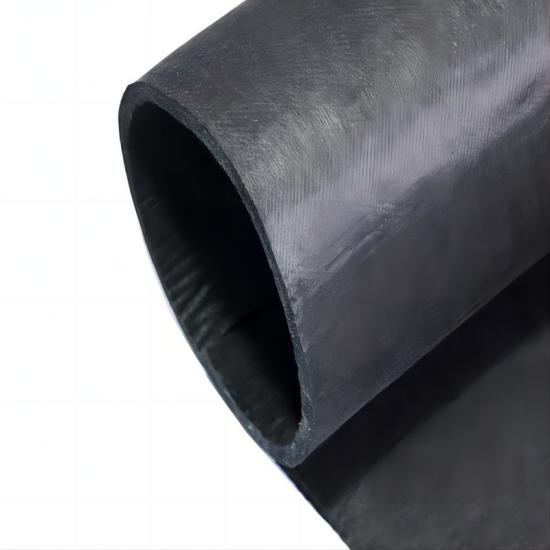
High Temperature Insulating Felt
5. Applications of Graphite Foams
Thanks to their multifunctional characteristics, graphite foams are used in a wide range of hightech applications:
• Thermal Management for Electronics
Heat sinks, heat spreaders, LED cooling modules, and thermal interfaces for power electronics.
• Aerospace and Automotive Components
Lightweight structural fillers, hightemperature insulators, and thermalprotection systems.
• Energy Storage and Battery Systems
Current collectors, porous electrodes, structural heat dissipation substrates for lithiumion and sodiumion batteries.
• Fuel Cells and Catalysis
Catalyst carriers, gas diffusion substrates, and electrochemical supports.
• Industrial Heat Exchangers
Porous conductive matrices for advanced heatexchange reactors.
• Composite Reinforcements
Graphite foam embedded in polymer or metal matrices creates composites with enhanced thermal properties.
6. Advantages of Graphite Foams
Graphite foams stand out due to several performance advantages:
• Superior ThermaltoWeight Ratio
They outperform copper and aluminum in heat dissipation on a mass basis.
• Customizable Architecture
Manufacturers can tailor density, pore size, and thermal conductivity to meet specific engineering needs.
• Environmentally Stable
Graphitic carbon is inert, corrosionresistant, and durable.
• High Efficiency in HeatExchange Systems
Large internal surface area enhances convection and conduction simultaneously.
• Lightweight Structural Support
Excellent for applications requiring strength without bulk mass.
• Compatibility with Composite Processing
Easily integrated with polymers, metals, or ceramics.
Conclusion
Graphite foams represent a highperformance class of carbonbased porous materials that combine extreme lightness with exceptional thermal and electrical conductivities. Their unique opencell structure and graphitic skeleton make them ideal for demanding applications in aerospace, electronics cooling, energy storage, catalysis, and advanced composite materials. With tunable porosity, scalable manufacturing methods, and versatile engineering benefits, graphite foams continue to play a critical role in nextgeneration materials and thermalmanagement technologies.