Xiamen TJ Metal Material Co., Ltd. (referred to as TJ Company) was established in 2009 and is now an important private backbone enterprise in Fujian Province, headquartered in Xiamen City, Fujian Province.
Reticulated carbon foam has emerged as a critical high-performance material across a wide range of industrial applications, particularly in fields that require exceptional thermal stability, high electrical conductivity, and a uniquely interconnected porous structure. As global industries move toward higher efficiency, lighter weight, and more durable components, reticulated carbon foam continues to gain prominence in mechanical equipment, energy systems, and functional devices.
1. Structural Features and Material Characteristics
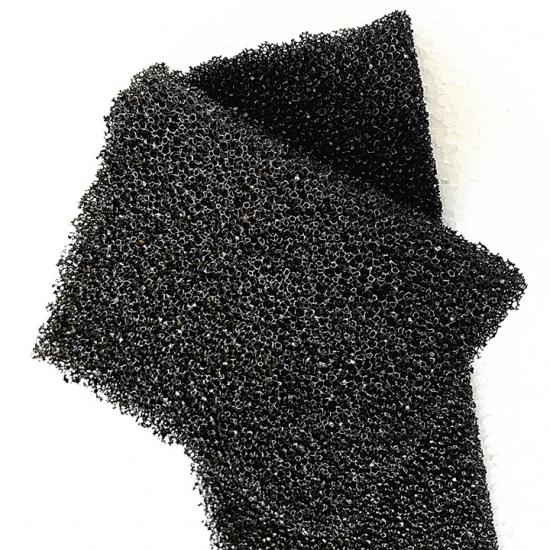
Reticulated carbon foam is a three-dimensional open-cell carbon structure derived from polymer or pitch precursors. Its defining characteristic is the fully interconnected network of carbon ligaments, creating a sponge-like architecture with pores typically ranging from 10 to 100 pores per inch (PPI). This high porosity—often exceeding 95%—provides numerous advantages in mechanical and thermal applications.
Key material properties include:
High Thermal Conductivity: The carbon framework enables rapid heat transfer, making it suitable for use in thermal management systems such as heat exchangers, cooling plates, and furnace components. Excellent Electrical Conductivity: The continuous carbon network supports stable and uniform current distribution, an important factor in battery electrodes, fuel cells, and electrochemical reactors. Low Density: Despite its strength, carbon foam is extremely lightweight, reducing the mass of the equipment it is integrated into. Chemical and Thermal Stability: It withstands high temperatures in both inert and oxidative environments and shows resistance to corrosion from most industrial chemicals. Mechanical Strength: Its unique geometry maintains structural rigidity while remaining flexible in design, allowing for custom configurations within complex mechanical systems.
These key attributes position reticulated carbon foam as an advanced engineered material that can meet diverse performance requirements.
2. Applications in Mechanical and Industrial Equipment
a. Heat Treatment and High-Temperature Furnaces
In modern thermal processing equipment, precise temperature control and long service life are essential. Reticulated carbon foam is commonly used in:
Microwave sintering furnaces High-temperature vacuum furnaces Rapid thermal processing systems
Its open-cell structure promotes uniform heating, while its high thermal conductivity reduces temperature gradients, improving the efficiency and stability of heat treatment operations.
b. Battery and Energy Storage Equipment
Reticulated carbon foam plays a significant role in lithium-ion, sodium-ion, and next-generation solid-state battery development. As a conductive scaffold, it supports active materials and accelerates electron transport within electrodes. Mechanical equipment designed for electrode fabrication—such as slurry coating machines, calendering systems, and vacuum drying ovens—benefits from using carbon foam-based components that enhance product quality, reduce resistance, and increase cycling stability.
c. Fuel Cells and Electrochemical Devices
In fuel cell assemblies, reticulated carbon foam is used as a gas diffusion layer, current collector, or catalyst support. Its interconnected pores provide pathways for reactant flow, while its carbon ligaments maintain excellent conductivity. Equipment such as membrane electrode assembly (MEA) production lines and electrochemical reactor modules frequently incorporate carbon foam to boost performance and minimize energy losses.
d. Filtration and Purification Systems
Thanks to its customizable porosity and corrosion resistance, reticulated carbon foam is applied in various mechanical filtration devices. It effectively filters molten metals, high-temperature gases, or aggressive chemical liquids. Filtration machines using carbon foam benefit from improved flow uniformity and reduced clogging due to the foam’s consistent pore geometry.
e. Thermal Management Equipment
Advanced cooling systems—whether for electronics, LED lighting, aerospace components, or industrial power modules—utilize reticulated carbon foam as heat spreaders or evaporative cooling cores. Mechanical equipment relying on stable thermal control significantly benefits from the foam’s ability to dissipate heat rapidly while maintaining structural integrity under stress.
Producing high-quality reticulated carbon foam requires precise engineering equipment and controlled processing conditions. Typical manufacturing steps include polymer foam templating, carbonization, graphitization, and post-treatment. Specialized mechanical equipment supports each stage:
Foam impregnation and coating equipment ensures uniform precursor distribution. High-temperature carbonization furnaces convert polymer templates into durable carbon structures. Graphitization furnaces elevate conductivity and thermal performance. CNC cutting and shaping machines prepare customized foam geometries for industry-specific applications.
Quality control systems, including optical inspection machines and porosity analyzers, are vital in verifying pore uniformity and mechanical strength.
4. Advantages for Modern Industrial Systems
The integration of reticulated carbon foam into mechanical equipment provides several performance benefits:
Reduced equipment weight and enhanced mechanical resilience Improved heat transfer efficiency and temperature uniformity Increased electrical conductivity for energy-related devices Longer service life in harsh operating conditions Flexibility for custom shapes and sizes in complex system designs
These advantages support the increasing demand for high-efficiency, environmentally friendly, and durable industrial solutions.