Xiamen TJ Metal Material Co., Ltd. (referred to as TJ Company) was established in 2009 and is now an important private backbone enterprise in Fujian Province, headquartered in Xiamen City, Fujian Province.
Carbon Foam Battery for Sale: Advanced Equipment Solutions for Next-Generation Energy Systems
As the global demand for high-performance energy storage continues to accelerate, carbon foam batteries have emerged as a promising next-generation solution. Their unique structural advantages—combined with excellent conductivity, lightweight design, and long operational life—make them highly attractive for industrial, commercial, and research applications. Today, many manufacturers and laboratories are actively searching for *carbon foam battery for sale* options, as well as the mechanical equipment required for their production, assembly, and performance optimization.
1. What Makes Carbon Foam Batteries Unique
Carbon foam batteries use reticulated carbon foam as the electrode substrate or support material. This three-dimensional interconnected structure provides significantly higher surface area compared to traditional metal foams or graphite plates. As a result, carbon foam batteries offer:
* High electrical conductivity
* Superior thermal diffusion and heat resistance
* Low internal resistance
* Enhanced ion transport capacity
* Lightweight and robust mechanical strength
These characteristics make them ideal for high-power applications such as electric vehicles, grid energy storage, military equipment, and renewable energy systems.
When buyers search for “carbon foam battery for sale,” they are often also seeking reliable manufacturing and testing equipment capable of supporting stable production and ensuring consistent battery performance.
2. Key Mechanical Equipment for Carbon Foam Battery Production
a. Carbon Foam Substrate Fabrication Equipment
Producing high-quality carbon foam is the foundation of carbon foam battery performance. This involves several stages of specialized equipment:
* Polymer foam impregnation systems
Ensure uniform resin penetration before carbonization.
* High-temperature carbonization furnaces
Convert the polymer precursor into stable carbon foam under controlled atmospheres.
* Graphitization furnaces
Enhance conductivity and mechanical strength by elevating carbon crystallinity.
* CNC cutting and shaping machines
Precisely process carbon foam into desired electrode sizes without damaging the porous structure.
These machines must maintain strict temperature, pressure, and geometric accuracy to guarantee the consistency of the foam’s pore structure.
b. Slurry Mixing, Coating, and Electrode Processing Equipment
While some carbon foam batteries use the foam directly as the electrode, others require surface modification or active material loading. Key equipment includes:
* High-speed slurry mixers
For uniform distribution of active materials such as lithium compounds or manganese oxides.
* Automated coating systems
Apply active layers evenly across the carbon foam surface.
* Vacuum drying ovens
Remove solvents without collapsing the foam structure.
* Roll-press and calendering machines
Improve electrode density and conductivity while maintaining structural integrity.
These machines ensure strong bonding between the carbon foam substrate and active electrochemical materials.
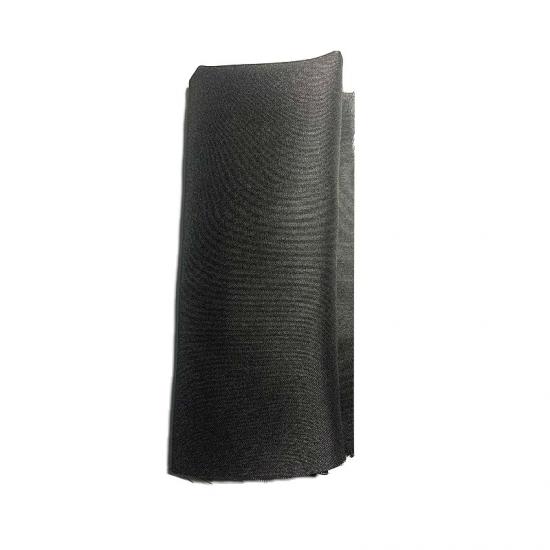
Electrode Felt
c. Cell Assembly and Integration Machinery
To manufacture carbon foam batteries at scale, advanced cell assembly equipment is critical:
* Electrolyte filling machines
Ensure accurate injection into foam-based electrodes for optimal ion transport.
* Sealing and welding equipment
Efficiently seal pouch cells, cylindrical cells, or prismatic casings used with carbon foam electrodes.
* Formation and aging systems
Activate electrochemical properties and stabilize the cell’s initial charging cycles.
Together, these machines help achieve consistent battery quality and long cycle life.
d. Testing and Quality Assurance Systems
Carbon foam batteries must undergo rigorous testing before being offered on the market. Typical equipment includes:
* Battery cycle testing cabinets
Measure capacity retention, rate performance, and long-term stability.
* Electrochemical impedance analyzers
Evaluate internal resistance and conductivity advantages provided by the foam structure.
* Thermal runaway and safety testing systems
Assess battery behavior under extreme conditions.
For businesses exploring *carbon foam battery for sale* opportunities, these quality assurance systems are essential to meet industry standards.
3. Industrial Applications Enabled by Carbon Foam Batteries
The unique performance characteristics of carbon foam batteries allow them to exceed the capabilities of conventional lithium-ion or lead-carbon systems in several fields:
a. Renewable Energy and Grid Storage
High-power output, long life cycles, and excellent thermal resistance make carbon foam batteries ideal for solar, wind, and peak-shaving systems.
b. Electric Vehicles and Mobility Devices
The porous carbon structure supports rapid charging and high discharge rates without overheating.
c. Aerospace and Defense
Lightweight construction paired with high stability provides superior performance under harsh environmental conditions.
d. Industrial Backup Power Systems
Carbon foam batteries offer long service life and reliable performance in critical power infrastructures.
4. Why the Market Demand Continues to Grow
As more companies introduce *carbon foam battery for sale* listings, the availability of advanced mechanical equipment enhances production efficiency, lowers cost per unit, and improves performance consistency. Manufacturers gain:
* Higher production throughput
* Better quality control
* Greater customization capability
* Reduced material waste
* Increased reliability in demanding applications
With global trends moving toward environmentally friendly and high-performance energy technologies, the adoption of carbon foam batteries and their specialized manufacturing equipment is expected to expand rapidly.