Xiamen TJ Metal Material Co., Ltd. (referred to as TJ Company) was established in 2009 and is now an important private backbone enterprise in Fujian Province, headquartered in Xiamen City, Fujian Province.
Foam Carbon – Professional Material Introduction
Foam carbon is a highly porous carbonbased material characterized by its threedimensional interconnected network, lightweight structure, high thermal stability, and exceptional electrochemical properties. As an advanced functional material, foam carbon has gained increasing attention in energy storage, catalysis, thermal engineering, environmental fields, and structural applications. Its unique physical and chemical characteristics originate from its engineered pore architecture, surface chemistry, and inherent carbon framework.
1. Concept of Foam Carbon
Foam carbon, sometimes referred to as carbon foam or porous carbon, is a synthetic material composed of a carbon skeleton with opencell or closedcell porosity. It is typically produced through carbonization, pyrolysis, or templating processes that convert organic precursors—such as polymers, resins, pitch, or biomass—into rigid carbon frameworks. The resulting structure exhibits extremely high surface area, low density, and excellent electrical and thermal conductivity. These features make foam carbon one of the most versatile advanced carbon materials available today.
2. Structural Characteristics
The structure of foam carbon is defined by:
• ThreeDimensional Porous Network
Its interconnected pores range from a few micrometers to several millimeters, forming a stable opencell architecture ideal for mass transport and diffusion.
• High SurfaceArea Carbon Framework
The carbon skeleton consists of graphitic or semigraphitic domains, providing abundant active sites for chemical reactions or electrochemical processes.
• Tunable Density and Pore Size
By adjusting precursor materials and processing methods, foam carbon can be tailored to exhibit ultralight densities (as low as 0.02 g/cm³) or higherdensity structures for mechanical reinforcement.
• Mechanical Robustness
Despite its lightweight nature, foam carbon maintains high compressive strength and structural integrity under thermal and electrochemical stress.
• Excellent Chemical Inertness
The carbon matrix provides high corrosion resistance when exposed to acids, bases, and organic solvents.
3. Key Material Properties
• High Electrical Conductivity
The semigraphitic nature of the carbon skeleton provides efficient electron transport, beneficial for electrodes and conductive substrates.
• Superior Thermal Stability
Foam carbon remains stable above 600–3000°C depending on structure and graphitization degree.
• Large Surface Area
Provides high adsorption capacity and excellent catalytic support performance.
• Low Density and Lightweight
Significantly reduces weight in composite structures or energystorage components.
• High Thermal Conductivity (in graphitic foams)
Enables rapid heat spreading and efficient thermal management in electronics.
• Environmental Compatibility
Nontoxic, chemically stable, and derived from scalable raw materials.
4. Manufacturing & Processing Techniques
Several industrial and laboratory technologies are used to fabricate foam carbon:
• Polymer Pyrolysis
Resins or polymers are foamed and then carbonized to create rigid porous carbon structures.
• PitchBased Foaming
Petroleum or coal tar pitch is heated to generate bubbles, by carbonization and graphitization.
• TemplateAssisted Methods
Using 3D templates such as metal foams, salt crystals, or polymer foams that are later removed to leave a carbon network.
• Chemical Vapor Deposition (CVD)
Deposits carbon on prefabricated porous frameworks for highpurity or graphitic foam carbon.
• BiomassDerived Processing
Natural materials like wood or plant fibers are pyrolyzed to produce sustainable carbon foams with hierarchical porosity.
Each method offers tunable pore structures, mechanical properties, and performance characteristics suitable for specific applications.
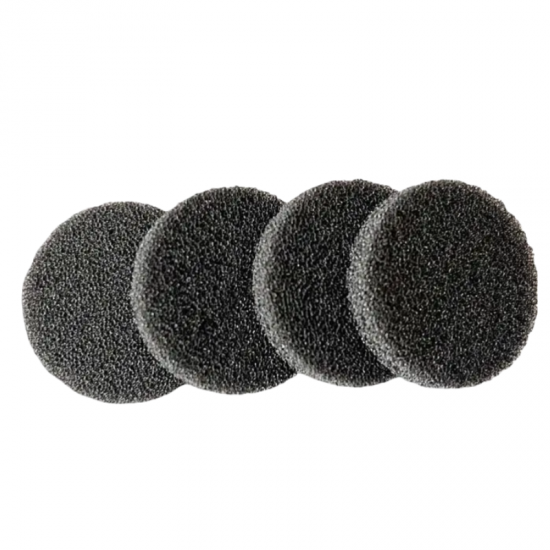
Low Density Carbon Foam
5. Applications of Foam Carbon
Due to its multifunctional nature, foam carbon is widely used in emerging and traditional industries:
• Electrodes for Energy Storage
Foam carbon serves as a conductive scaffold for lithiumion, sodiumion, zincair, and carbon foam batteries, offering enhanced ion diffusion and electron transport.
• Supercapacitor Substrates
Large surface area and conductivity enable highcapacitance electrochemical doublelayer storage.
• Catalyst Supports
Used in fuel cells, metal catalysts, and electrochemical reactors due to high stability and large contact area.
• Thermal Management Materials
Graphitized carbon foams provide high thermal conductivity for heat sinks, LED cooling, and aerospace thermal systems.
• Filtration and Environmental Purification
Effective for adsorption of pollutants, oil–water separation, and air purification.
• Lightweight Structural Components
Applied in automotive, aerospace, and defense sectors where high strengthtoweight ratio is critical.
• Sensor and Absorber Materials
Used for electromagnetic shielding, acoustic insulation, and chemical sensing.
6. Advantages of Foam Carbon
• Outstanding multifunctionality
Combines mechanical, electrical, thermal, and chemical performance in a single material.
• Highly tailorable properties
Pore size, density, surface chemistry, and conductivity can be precisely engineered.
• Excellent durability
Maintains structural and electrochemical stability under harsh conditions.
• Superior mass & heat transport
Opencell porosity enhances diffusion and convection efficiency.
• Lightweight and environmentally friendly
Supports green manufacturing and reduces energy consumption in enduse applications.
Conclusion
Foam carbon is an advanced porous material with a uniquely engineered threedimensional architecture and exceptional physical properties. Its high surface area, lightweight structure, thermal stability, and electrochemical performance make it indispensable in modern energy systems, catalysis, environmental engineering, and structural applications. As manufacturing technologies continue to advance, foam carbon is expected to play an increasingly important role in nextgeneration batteries, highperformance heat management, and multifunctional composite materials.