Xiamen TJ Metal Material Co., Ltd. (referred to as TJ Company) was established in 2009 and is now an important private backbone enterprise in Fujian Province, headquartered in Xiamen City, Fujian Province.
Carbon Foam Price – Professional Material Introduction
Carbon foam is a lightweight, threedimensional porous carbon material distinguished by its high surface area, exceptional thermal stability, and excellent electrical conductivity. As advanced energy systems, thermalmanagement technologies, and structural composites continue to evolve, carbon foam has become an increasingly important functional material. When discussing carbon foam price, it is essential to understand the material’s concept, structure, characteristics, production processes, applications, and performance advantages, since these factors directly influence market value and cost trends.
1. Concept of Carbon Foam
Carbon foam is a solid foam composed of interconnected carbon ligaments and highly porous cells. It is typically produced by carbonizing polymeric or pitchbased precursors, resulting in a rigid, lightweight, and electrically conductive structure. Because of its unique architecture, carbon foam exhibits outstanding multifunctional properties that traditional bulk carbon materials cannot achieve. Its price varies according to density, pore size, raw materials, production technology, thermal conductivity, and application requirements.
2. Structural Characteristics
The structure of carbon foam directly contributes to its performance and price level:
• 3D Porous Network
Carbon foam has a continuous opencell network with pore sizes ranging from a few micrometers to several millimeters. These interconnected pores greatly enhance mass transport, heat dissipation, and electrolyte penetration.
• Tailorable Density and Porosity
Densities typically range from 0.05 to 0.8 g/cm³.
Lowerdensity foams cost less to produce but offer lower mechanical strength; higherdensity foams are more expensive due to more complex processing and higher carbon content.
• Carbon Ligament Framework
The carbon skeleton is stable at high temperatures, chemically resistant, and electrically conductive. Advanced treatment—such as graphitization—raises conductivity but increases price significantly.
• Surface Functionalization
Some commercial carbon foams undergo oxidation, coating, activation, or metal impregnation. These posttreatments improve performance but also increase overall product cost.
3. Key Material Properties
Carbon foam exhibits several properties that justify its wide commercial use and influence its market price:
• Excellent Thermal Conductivity
Graphitized foam can reach thermal conductivities above 150 W/m·K, making it valuable for heat sinks and thermalmanagement devices.
• High Electrical Conductivity
The interconnected carbon network allows fast electron transport, ideal for electrodes and current collectors.
• Exceptional Thermal and Chemical Stability
Carbon foam maintains structural integrity even above 1000°C in inert atmospheres.
• Low Density and High StrengthtoWeight Ratio
Its high porosity offers lightweight structural advantages while maintaining mechanical strength.
• High Surface Area
Large internal surfaces support catalytic reactions, adsorption processes, and electrochemical activity.
These properties significantly affect production cost and therefore the carbon foam price in global markets.
4. Manufacturing Processes
Several production methods influence both performance and pricing:
• Polymer Foam Carbonization
Polyurethane or phenolic foams are carbonized at high temperatures. This is one of the most costefficient manufacturing routes, resulting in moderateprice carbon foam.
• PitchBased Carbon Foam
Using petroleum or coal pitch produces stronger, more thermally conductive foams. This route increases production cost.
• Chemical Vapor Deposition (CVD) Reinforcement
CVD strengthens foam ligaments and enhances conductivity, substantially increasing price due to high energy and equipment requirements.
• Graphitization Treatment
Graphitizing carbon foam above 2500°C greatly improves thermal conductivity but also significantly raises costs due to extreme energy consumption.
• Activated Carbon Foam Fabrication
Additional chemical or physical activation enhances surface area, increasing price depending on activation intensity.
Thus, the carbon foam price reflects not only raw materials but also energy intensity, process complexity, and posttreatment methods.
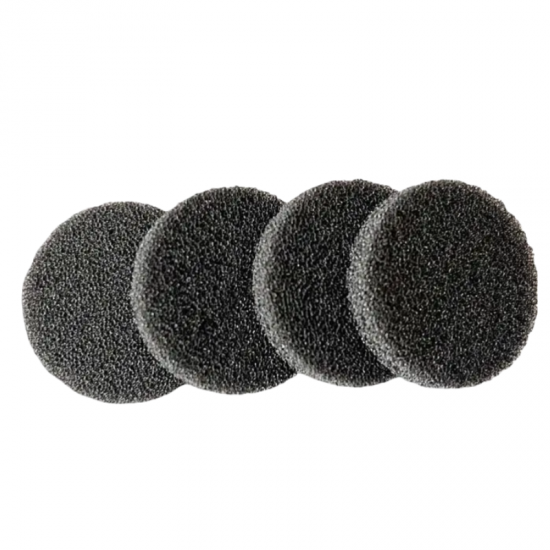
Low Density Carbon Foam
5. Applications Across Industries
Carbon foam is used in highvalue fields where performance outweighs material cost:
• Energy Storage
Used as electrodes or current collectors for supercapacitors, lithium–ion batteries, and sodium–ion batteries due to high conductivity and surface area.
• Thermal Management
Applied in heat sinks, vapor chambers, LED cooling systems, and aerospace thermal structures.
• Environmental and Chemical Processing
Used in filters, catalyst supports, adsorption materials, and gas purification systems.
• Structural and Lightweight Engineering
Integrated into composites for automotive, aerospace, and defense applications.
• FireResistant and Insulation Systems
Carbon foam’s hightemperature tolerance makes it ideal for fireproof panels and insulation.
Diverse applications create wide price variability depending on industrial demand.
6. Advantages Influencing Price Competitiveness
• High Functional Performance
Carbon foam outperforms many metals, ceramics, and polymers in thermal and electrical functions, supporting higher market value.
• Customizable Properties
Adjustable pore size, density, and conductivity enable tailored solutions for various industries.
• Long Service Life
Exceptional durability reduces lifecycle cost despite higher initial price.
• Compatibility with Composites
Easily combined with resins, metals, or ceramics to form multifunctional hybrid materials.
Conclusion
The carbon foam price depends on a complex interplay of structure, raw materials, manufacturing processes, and application requirements. As industries increasingly demand lightweight, thermally conductive, and highperformance materials, carbon foam has become an indispensable advanced material. Although highend graphitized foams can be costly, their superior thermal management, mechanical stability, and electrochemical performance justify the investment in many cuttingedge applications. As production technologies mature and scale increases, carbon foam prices are expected to become more competitive while continuing to support highvalue industrial innovation.