Xiamen TJ Metal Material Co., Ltd. (referred to as TJ Company) was established in 2009 and is now an important private backbone enterprise in Fujian Province, headquartered in Xiamen City, Fujian Province.
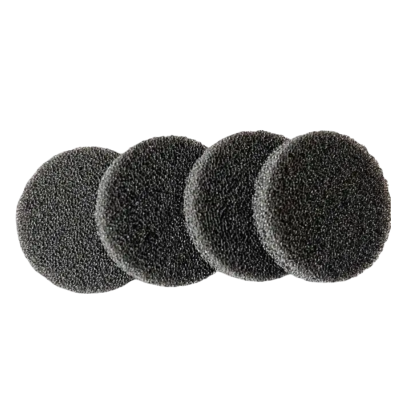
Carbon foam is an advanced porous carbonbased material characterized by its threedimensional interconnected network, low density, high electrical and thermal conductivity, and excellent mechanical stability. As a nextgeneration functional material, carbon foam is widely used in energy storage, thermal management, aerospace engineering, filtration, and structural reinforcement. Its unique combination of lightweight architecture and highperformance carbon properties makes it a key candidate for emerging technologies that require efficient transport of heat, charge, or fluids.
1. Concept of Carbon Foam
Carbon foam is produced by carbonizing polymeric or organic precursors into a rigid, opencell carbon network. The resulting structure consists of continuous carbon ligaments forming a 3D porous lattice. Unlike traditional porous materials, carbon foam offers a balance of low density and structural strength, combined with the intrinsic chemical inertness and conductivity of carbon. Depending on the precursor and processing method, carbon foam can be engineered with a wide range of pore sizes—from a few micrometers to several millimeters—enabling tailored performance for specific industrial and research applications.
2. Structure and Microarchitecture
The internal structure of carbon foam is based on opencell interconnected pores, typically constituting 80–98% porosity. The key structural attributes include:
• Ligament Framework
Carbon ligaments, derived from pyrolyzed organic precursors, form a rigid skeletal network that maintains stability at high temperatures.
• Controlled Porosity
Pore structures can be tuned by adjusting precursor formulation, foaming conditions, and carbonization temperature. The porosity determines mechanical strength, electrical properties, and thermal performance.
• High Surface Area
The 3D network provides extensive internal surface area, beneficial for catalysis, adsorption, and electrode applications.
• Graphitizable or NonGraphitizable Variants
Depending on the carbon precursor used, foams can be transformed into graphitic structures for superior conductivity or remain amorphous for enhanced chemical compatibility.
3. Material Characteristics
Carbon foam exhibits a set of exceptional material properties:
• Lightweight
With densities as low as 0.02 g/cm³, carbon foam offers an excellent strengthtoweight ratio.
• High Electrical Conductivity
Graphitic variants can reach conductivities suitable for battery electrodes and heatspreaders.
• Excellent Thermal Conductivity
Due to its interconnected carbon pathways, carbon foam can dissipate heat rapidly, making it ideal for thermal management.
• Superior Chemical and Thermal Stability
The material is resistant to most chemicals and can withstand temperatures above 2000°C in inert atmospheres.
• Mechanical Resilience
The foam structure provides compressive strength while maintaining low density.
• Flame Resistance
Carbonbased foams are inherently flameretardant and do not melt or drip when exposed to heat.
4. Fabrication and Processing
Carbon foam can be produced through several manufacturing routes:
• Polymer Foam Carbonization
A polymer foam—such as polyurethane or phenolic foam—is pyrolyzed in an inert atmosphere, transforming the polymer matrix into carbon while preserving its porous architecture.
• Resin Impregnation and Foaming
Resins such as phenolic, pitch, or furan resins are foamed chemically or mechanically and subsequently carbonized.
• Chemical Vapor Deposition (CVD) Reinforcement
CVD processes can deposit additional carbon layers onto the foam ligaments to enhance conductivity or mechanical strength.
• Graphitization
Heat treatment above 2500°C can convert amorphous carbon into ordered graphite, improving thermal and electrical performance.
Each method allows precise tuning of pore structure, density, mechanical integrity, and conductivity.
Carbon foam is widely used across multiple industries due to its multifunctional performance:
• Energy Storage
As an electrode substrate for lithiumion, sodiumion, and supercapacitor systems, carbon foam provides superior ion transport and high electrical conductivity.
• Thermal Management
Used as heat sinks, heat spreaders, or cooling cores in power electronics, aerospace, and LED systems due to exceptional thermal conductivity.
• Filtration and Catalysis
High surface area and chemical stability make carbon foam ideal for gas purification, water treatment, and catalytic supports.
• Structural Materials
Lightweight strength makes it suitable for aerospace sandwich panels and mechanical damping structures.
• Battery and Fuel Cell Components
Porosity enhances electrolyte accessibility and reaction kinetics.
• Fire Protection and Insulation
Inherently flameresistant properties support advanced insulation systems.
6. Advantages
Carbon foam offers several critical advantages over traditional porous materials:
• Outstanding StrengthtoWeight Ratio
Lighter than metals yet possesses structural integrity for demanding mechanical applications.
• High Conductivity Options
Graphitic variants provide unmatched thermal and electrical conduction at low weight.
• Customizable Porosity
Engineered structure enables precise control over mechanical, thermal, and fluidic behavior.
• Long Lifetime and Durability
Carbon’s chemical inertness ensures longterm stability even in harsh environments.
• MultiFunctional Performance
Simultaneously supports mechanical load, heat transfer, and electrochemical reactions.
• Environmentally Stable
Nontoxic, recyclable, and thermally robust.
Conclusion
Carbon foam is a versatile, highperformance material that combines lightweight architecture with exceptional thermal, electrical, and mechanical properties. Its tunable pore structures, high surface area, and outstanding durability position it as a key enabling material in nextgeneration energy systems, aerospace engineering, filtration technologies, and thermalmanagement solutions. With expanding demand for multifunctional and sustainable materials, carbon foam continues to gain importance across both industrial and scientific sectors.