Xiamen TJ Metal Material Co., Ltd. (referred to as TJ Company) was established in 2009 and is now an important private backbone enterprise in Fujian Province, headquartered in Xiamen City, Fujian Province.
Graphene Foams – Professional Material Introduction
Graphene foams are a class of threedimensional (3D) porous carbon materials engineered by assembling graphene sheets into interconnected networks. As an extension of twodimensional graphene, graphene foams retain graphene’s exceptional electrical, mechanical, and thermal properties while offering a macroscopic, lightweight, and highly porous architecture. Their combination of ultralow density, high conductivity, and large surface area makes graphene foams ideal for nextgeneration energy storage, thermal management, catalysis, and multifunctional composite applications.
1. Concept of Graphene Foams
Graphene foams are 3D anisotropic structures composed of graphene or fewlayer graphene walls connected into an opencell framework. They are often produced by chemical vapor deposition (CVD), freezecasting, selfassembly, or reduction of graphene oxide templates. This 3D architecture overcomes the restacking problem commonly seen in 2D graphene, preserving high surface accessibility and enabling practical macroscopic use. The foam behaves as a continuous graphene network, allowing efficient electrical and thermal transport throughout the structure.
2. Structure and Morphology
Graphene foams typically exhibit:
• Porous Cellular Structure
Pore sizes range from micrometers to millimeters, depending on the fabrication method. Opencell structures promote mass transport and reduce mechanical stress concentration.
• Ultralight Framework
Densities can be as low as 1–20 mg/cm³, making graphene foams among the lightest solid materials.
• Continuous Graphitic Walls
The foam walls consist of multilayer graphene sheets stacked with controlled orientation and thickness. This continuity is key to maintaining electrical conductivity.
• Tunable Surface Chemistry
Through chemical modification, reduction, functional group control, or heteroatom doping, the foam’s surface polarity, catalytic activity, and interaction with electrolytes can be tailored.
• Mechanical Flexibility
The elastic framework allows compression and recovery without major structural damage, especially in elastomeric foam variants.
3. Key Characteristics
Graphene foams exhibit several outstanding material properties:
• High Electrical Conductivity
Conductive pathways throughout the foam support rapid electron movement, ideal for electrodes and sensors.
• Exceptional Thermal Conductivity
The interconnected graphene network efficiently dissipates heat, useful in thermal interface and cooling applications.
• Large Surface Area
Typical surface areas range from 300–1500 m²/g, enhancing adsorption, catalytic activity, and electrochemical energy storage.
• Ultralow Density
Their lightweight nature allows weightsensitive engineering applications, including aerospace and portable electronics.
• Mechanical Strength and Elasticity
Graphene foams withstand compression, bending, and repeated load cycles, offering durability and structural stability.
• Chemical Stability
Graphene is inert to most chemicals, enabling use in extreme environments.
4. Fabrication Processes
Common fabrication technologies include:
• Chemical Vapor Deposition (CVD)
Graphene grows on a metal foam scaffold such as Ni foam, which is later removed by etching. This method yields highquality, crystalline graphene foams.
• FreezeCasting (IceTemplating)
Graphene oxide slurry is frozen and then freezedried. The ice crystals create oriented channels, forming anisotropic porous structures after reduction.
• Hydrothermal SelfAssembly
Graphene oxide sheets spontaneously form 3D networks under hydrothermal treatment, by reduction to conductive graphene.
• 3D Printing
Emerging methods allow custom shapes, gradients, and architectures, improving structural control.
• Polymer Templating
Polymer foams are infiltrated with graphene precursors and later removed to create highly porous graphene replicas.
Each method influences porosity, conductivity, density, and mechanical performance.
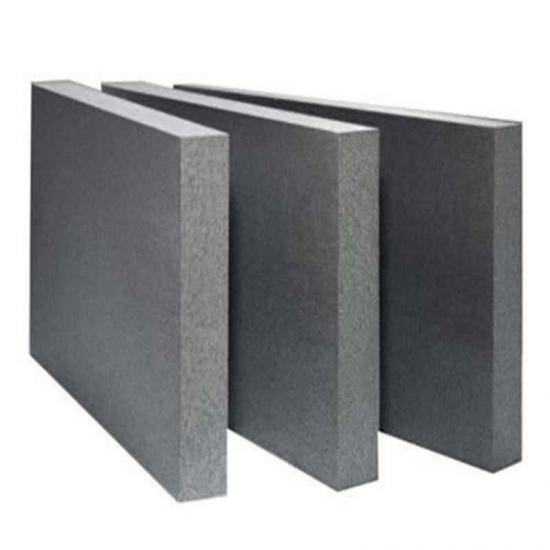
Flame Retardant Graphene Foam
5. Applications of Graphene Foams
Graphene foams have rapidly gained applications across advanced technologies:
• Energy Storage
Used as scaffolds for lithiumion, sodiumion, lithiumsulfur, and supercapacitor electrodes. The foam structure enables fast ion diffusion and high active material loading.
• Thermal Management
Applied as heat spreaders, lightweight thermal interface materials, and cooling composites.
• Electrocatalysis and Chemical Catalysis
Serve as catalytic supports for metal nanoparticles due to high surface area and excellent conductivity.
• Sensors
Provide large interaction surfaces for strain, gas, biosensing, and environmental detection.
• Absorption and Filtration
Used for oil–water separation, pollutant adsorption, and advanced filtration systems.
• Structural and Functional Composites
Integrated into polymers or metals to enhance conductivity, mechanical strength, and impact resistance.
• Biomedical Applications
Potential uses include tissue scaffolds, drug delivery carriers, and biosensors when properly functionalized.
6. Advantages
Graphene foams offer several competitive advantages over traditional porous materials such as metal foams, polymer foams, or activated carbon:
• Superior Conductivity
Both thermal and electrical conductivity outperform most conventional porous materials.
• Lightweight–Strength Balance
They achieve high mechanical stability at extremely low density.
• Enhanced Electrochemical Performance
Ideal for highrate and highcapacity energy storage.
• Customizable Architecture
Pore size, density, and chemistry are highly tunable.
• Environmental Stability
Graphene foams are resistant to corrosion, oxidation, and chemical degradation.
• Scalable Fabrication
New production technologies are making largescale manufacturing increasingly feasible.
Conclusion
Graphene foams represent one of the most versatile and promising 3D carbon materials in modern materials science. Their ultralight porous architecture, combined with the intrinsic properties of graphene, enables exceptional performance across energy storage, catalysis, sensing, thermal management, and structural composites. As fabrication methods continue to advance and costs decrease, graphene foams are expected to play a transformative role in nextgeneration highperformance materials and industrial technologies.