Xiamen TJ Metal Material Co., Ltd. (referred to as TJ Company) was established in 2009 and is now an important private backbone enterprise in Fujian Province, headquartered in Xiamen City, Fujian Province.
Graphite Foam Price – A Professional Introduction to the Material
Graphite foam is an advanced porous carbon material characterized by a threedimensional interconnected network, high thermal conductivity, low density, and excellent chemical stability. It is widely used in thermal management, aerospace, battery systems, and highperformance engineering applications. With the rapid growth of electric vehicles, energy storage devices, and compact cooling technologies, the graphite foam price has become an important factor for researchers, manufacturers, and industrial users evaluating material performance relative to cost. Understanding the material’s concept, structure, properties, processing technologies, application sectors, and value advantages provides deeper insight into how its market price is determined.
1. Concept of Graphite Foam
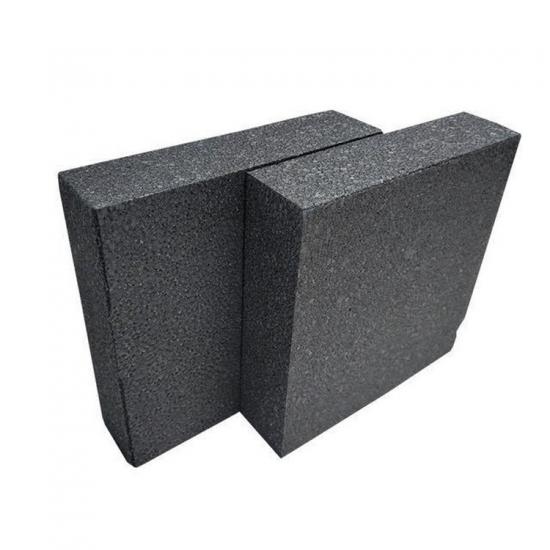
Graphite foam is a lightweight carbonbased material produced by graphitizing a foamed precursor under high temperature. The result is a rigid, porous structure composed almost entirely of graphitic carbon, offering high intrinsic thermal conductivity and low thermal expansion. Its unique combination of low density and high heattransfer capability makes it one of the most effective solidstate thermal interface and heatdissipation materials available today. As demand grows, the graphite foam price reflects both material complexity and production requirements.
2. Structure and Morphology
The structure of graphite foam is defined by:
• 3D Interconnected OpenCell Network
The foam consists of open pores ranging from 100 to 500 micrometers, forming a continuous conductive skeleton that allows efficient heat transport and fluid flow.
• High Graphitization Degree
During hightemperature treatment above 2500°C, carbon atoms rearrange into ordered graphite layers, dramatically improving thermal and electrical properties.
• Lightweight Porous Framework
Typical densities range between 0.2 and 0.6 g/cm³, much lower than metals, making it ideal for aerospace and portable devices.
• Surface Modifiability
The graphite foam skeleton can be impregnated or coated with metals, polymers, or ceramics to enhance mechanical strength or modify electrical/thermal performance.
This sophisticated structure contributes significantly to the overall graphite foam price, as precise control of pore size, purity, and graphitization requires advanced manufacturing equipment.
3. Material Characteristics
Graphite foam exhibits several remarkable characteristics:
• Exceptional Thermal Conductivity
Its thermal conductivity can exceed 150–300 W/m·K, outperforming many metals while maintaining ultralow weight.
• Low Density and High Surface Area
Ideal for heat exchangers, heat sinks, and lightweight structural components.
• High Temperature Resistance
Graphite foam remains stable in inert atmospheres up to 3000°C.
• Chemical and Corrosion Resistance
It resists most acids, alkalis, and solvents, enabling longterm operation in harsh environments.
• Electrical Conductivity
The interconnected graphite skeleton supports efficient electron transport, important for battery and electronic applications.
These highlevel functional characteristics contribute to a higher graphite foam price compared to conventional carbon foams or metal foams.
4. Processing and Manufacturing
Graphite foam production involves complex, multistep processes:
• Polymer or Pitch Foaming
Precursors such as polyurethane foam or mesophase pitch are foamed to establish pore structure.
• Carbonization
The foamed structure is heated (800–1000°C) to remove volatile components and create a carbon skeleton.
• HighTemperature Graphitization
Heating above 2500°C converts carbon to crystalline graphite, elevating conductivity and strength.
• PostProcessing
Steps such as machining, surface coating, metal infiltration, or composite integration may be added.
The high energy consumption and specialized furnace systems needed for graphitization play a major role in defining the graphite foam price, which varies based on purity, thickness, density, and customization requirements.
Decoration Graphene Foam
5. Applications
Graphite foam is used in a wide range of industries:
• Thermal Management
Used in heat sinks, heat spreaders, LED cooling systems, radar devices, and microelectronics.
• Energy Storage
Acts as a conductive scaffold in lithiumion and sodiumion batteries, improving rate capability and cycle life.
• Aerospace and Aviation
Lightweight thermal protection and cooling structures for satellites, drones, and highspeed aircraft.
• Industrial HighTemperature Systems
Used in chemical reactors, catalytic systems, and hightemperature insulation.
• Composite Materials
Integrated into polymer or metal composites to enhance heat conductivity while reducing weight.
These highvalue applications justify the relatively elevated graphite foam price, especially for industries requiring precisionengineered thermal solutions.
6. Advantages and Value Proposition
Graphite foam provides:
• Superior Heat Dissipation
A top choice for compact, highpower electronic cooling systems.
• Unmatched StrengthtoWeight Ratio
Makes devices lighter without compromising thermal performance.
• Design Flexibility
Easily machined into custom shapes, benefiting R&D and prototyping.
• LongTerm Durability
Resistant to corrosion, fatigue, and oxidation in controlled environments.
• CostEffective Performance
Despite the higher initial graphite foam price, its long lifespan, thermal efficiency, and reduced system complexity offer lower total operating costs.
Conclusion
The graphite foam price is determined by the material’s highquality structure, sophisticated manufacturing process, excellent physical properties, and broad industrial value. As advanced electronics, aerospace systems, and nextgeneration energy devices continue to grow, graphite foam remains a premium yet costeffective thermal and structural material. Its unique performance advantages ensure strong demand and justify its price in highperformance engineering markets.