Xiamen TJ Metal Material Co., Ltd. (referred to as TJ Company) was established in 2009 and is now an important private backbone enterprise in Fujian Province, headquartered in Xiamen City, Fujian Province.
Graphite Foam – Professional Material Introduction
Graphite foam is a highly porous, lightweight carbonbased material characterized by its threedimensional interconnected network and exceptional thermal and electrical properties. As an advanced functional material, graphite foam combines the advantages of conventional graphite—such as high thermal conductivity, chemical stability, and electrical conductivity—with the benefits of a porous cellular structure. This unique combination makes graphite foam increasingly important in thermal management, energy storage, aerospace engineering, and various industrial applications where high performance and low density are essential.
1. Concept of Graphite Foam
Graphite foam is produced by graphitizing a carbon precursor with a cellular structure under high temperatures. During the graphitization process, the carbon framework rearranges into ordered graphite layers, giving the foam its exceptional thermal conductivity and stability. With porosity levels ranging typically between 70% and 95%, graphite foam provides a large specific surface area and low density while maintaining excellent mechanical integrity.
It is considered a nextgeneration thermal management and lightweight structural material due to its combination of low density, high heat transfer capability, and strong chemical resistance.
2. Structural Characteristics
Graphite foam consists of:
• Interconnected Graphitic Cell Walls
These walls are composed of crystalline graphite layers, providing mechanical strength and excellent conductivity.
• OpenPore Cellular Network
The openpore architecture allows free movement of air, fluids, or phasechange materials, making the foam ideal for heat dissipation and chemical processes.
• Adjustable Pore Size and Density
Depending on manufacturing conditions, pore diameters typically range from 100 to 500 micrometers, enabling customization for different applications.
• Lightweight Framework
With densities as low as 0.1–0.5 g/cm³, graphite foam offers high strengthtoweight ratios compared with metal foams.
3. Material Properties
Graphite foam exhibits a series of outstanding physical and chemical properties:
• High Thermal Conductivity
Thermal conductivity values can exceed 100–170 W/m·K, far surpassing polymerbased foams and rivaling aluminum heat sinks.
• Excellent Electrical Conductivity
The graphitic structure provides fast electron transport, useful in electrodes and energy devices.
• Low Density
Its lightweight nature significantly reduces material consumption in aerospace and electronics.
• High Temperature Resistance
Graphite foam maintains structural integrity up to 3000°C in inert atmospheres.
• Chemical Inertness
It is resistant to most acids, alkalis, and organic solvents.
• High Specific Surface Area
Ideal for catalytic support, adsorption processes, and energy storage.
4. Processing and Manufacturing
Several industrial methods can be used to manufacture graphite foam:
• Foaming of Polymer Precursors
Phenolic resin, polyurethane, or pitch is foamed through thermal expansion or chemical blowing agents, by carbonization and graphitization.
• MetalAssisted Foaming
Molten metals such as aluminum or nickel can template the foam structure before carbon infiltration and metal removal.
• Direct Pitch Foaming
Mesophase pitch is heated under controlled conditions to initiate foaming, then carbonized and graphitized.
• Chemical Vapor Deposition (CVD) Coating
In some processes, a carbon foam is deposited with CVD graphite layers to enhance conductivity and mechanical robustness.
Each method offers different pore structures, densities, and mechanical properties tailored to specific applications.
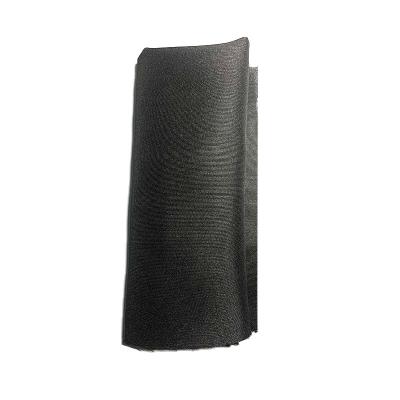
Electrode Felt
5. Applications
Graphite foam is used across a wide range of industries:
• Electronic Thermal Management
It serves as heat sinks, heat spreaders, and thermal interface materials for processors, LED modules, and power electronics.
• Energy Storage and Batteries
Graphite foam can act as a current collector, porous electrode skeleton, or thermal buffer in lithiumion, sodiumion, and solidstate batteries.
• Aerospace and Defense
Its lightweight and heatresistant nature make it suitable for hightemperature insulation, lightweight structural components, and thermal shielding.
• Fuel Cells and Catalysis
Large surface area and chemical stability enable use as catalyst supports and gas diffusion layers.
• Chemical Processing
Ideal for filters, adsorbents, and hightemperature fluid handling due to corrosion resistance.
• Phase Change Material (PCM) Composites
Graphite foam provides thermal pathways and containment structures for PCMs used in energysaving devices.
6. Advantages
• Superior Heat Dissipation
The combination of high conductivity and large surface area enables unmatched thermal performance.
• Lightweight and Strong
High strengthtoweight ratio benefits aerospace and portable devices.
• Customizable Structure
Pore size, density, and cell geometry can be tuned for specific engineering needs.
• High Durability
Resistant to thermal shock, oxidation (with coating), and chemical erosion.
• Energy Efficient
Graphite foam materials reduce cooling system loads and improve energy efficiency in electronics.
• Wide Operating Range
Maintains performance across extreme environments, from cryogenic to ultrahigh temperatures.
Conclusion
Graphite foam is a highperformance, lightweight, and thermally conductive material distinguished by its porous 3D graphitic structure. With exceptional thermal management capabilities, chemical stability, and structural versatility, it plays a crucial role in electronics, aerospace, energy storage, and advanced industrial systems. As industries continue to demand materials that deliver high efficiency, low weight, and reliability, graphite foam is expected to become increasingly important in nextgeneration engineering and functional applications.