Xiamen TJ Metal Material Co., Ltd. (referred to as TJ Company) was established in 2009 and is now an important private backbone enterprise in Fujian Province, headquartered in Xiamen City, Fujian Province.
Graphene Foam Price – Professional Introduction to an Advanced Experimental Material
Graphene foam is an ultralight, threedimensional (3D) porous material composed of interconnected graphene sheets arranged in a continuous, opencell architecture. It combines the exceptional electrical, thermal, and mechanical properties of graphene with a macroscopic foam structure, making it an ideal material for energy storage, thermal management, catalysis, composite reinforcement, and advanced scientific research. When used in laboratories, the graphene foam price varies depending on purity, pore size, density, synthesis method, and performance grade, reflecting its complexity and value as a highend experimental material.
1. Concept of Graphene Foam
Graphene foam is a 3D carbon framework fabricated from multiple layers of graphene grown or assembled on a porous template. Unlike twodimensional graphene sheets, graphene foam possesses longrange structural continuity and high interconnectivity, enabling efficient electron and heat transport pathways. Its extremely low density—often less than 10 mg/cm³—combined with high surface area and chemical stability, makes it an attractive multifunctional material for laboratory research and industrial application development.
Because of its enhanced performance and complex fabrication processes, the graphene foam price reflects its advanced material category, often higher than traditional carbon foams or graphitebased porous materials.
2. Structural Characteristics
Graphene foam features a threedimensional, opencell network, typically constructed from:
• Graphene Struts and Walls
Thin graphene layers form the structural skeleton. The number of layers can vary from fewlayer graphene to multilayer assemblies.
• Tunable Pore Architecture
Pore diameters typically range from tens of micrometers to several hundred micrometers, depending on the template design (e.g., nickel foam, polymer foam, or freezecast structures).
• High Specific Surface Area
Surface areas can exceed hundreds of m²/g, depending on growth conditions and posttreatment.
• UltraLow Density
The foam can be more than 99% empty space, offering exceptional lightweight performance.
• Continuous Conductive Pathways
Its interconnected graphene network ensures superior electron mobility and low electrical resistance.
These structural characteristics greatly influence functionality, and consequently, the graphene foam price for different grades.
3. Material Properties
Graphene foam exhibits several outstanding properties:
• Electrical Conductivity
Exceptional conductivity makes it suitable for electrodes, conductive scaffolds, and electromagnetic shielding.
• High Thermal Conductivity
Continuous graphene pathways enable effective heat dissipation, beneficial for batteries, LEDs, and microelectronics.
• Mechanical Strength and Flexibility
Despite ultralow density, graphene foam shows high compressive strength, fatigue resistance, and elastic recovery.
• Chemical and Thermal Stability
It resists oxidation at moderate temperatures and maintains structural integrity under harsh conditions.
• Large Surface Area
Ideal for catalytic reactions, adsorption, and surface functionalization.
These unique characteristics make graphene foam a premium experimental material, contributing to its price variability across suppliers.
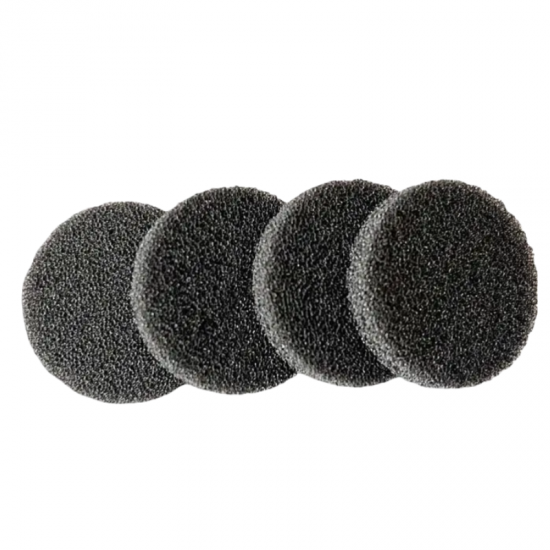
Carbon Foam
4. Fabrication Processes
Graphene foam can be produced using several fabrication methods, each influencing material quality and graphene foam price.
• Chemical Vapor Deposition (CVD) on Metal Foam Templates
Highquality graphene grown on nickel foam, by chemical etching.
Advantages: Excellent conductivity, uniformity
Cost impact: High due to equipment, precise control, and template removal
• FreezeCasting or Hydrothermal Assembly
Graphene oxide suspensions assembled into 3D structures, then reduced to graphene.
Advantages: Scalable, tunable pore structure
Cost impact: Moderate
• 3D Printing and Additive Manufacturing
Direct fabrication of graphene aerogel or foam structures.
Advantages: Custom architectures
Cost impact: Higher due to specialized equipment and materials
• TemplateFree SelfAssembly
Chemical reduction and spontaneous formation of porous graphene networks.
Cost impact: Lower but produces less uniform material
The chosen process significantly impacts material performance and experimentalgrade price.
5. Applications
Graphene foam is widely used in advanced scientific research and technology development:
• Energy Storage
Electrodes for sodiumion batteries, lithiumion batteries, supercapacitors, and hybrid capacitors.
• Thermal Management
Heat spreaders, battery cooling components, thermal interface materials.
• Catalysis and Chemical Engineering
Support structures for metal catalysts, photocatalysts, and electrocatalysts.
• Environmental Applications
Adsorbents for oil–water separation, pollutant capture, and filtration systems.
• Sensors and Electronics
Pressure sensors, flexible circuits, electromagnetic shielding components.
• Composite Materials
Reinforcement for polymers, metals, and ceramics, improving strength and conductivity.
These functional roles justify the use of highprecision graphene foam in laboratories, affecting its cost.
6. Advantages
• Exceptional multifunctional performance due to graphene’s intrinsic properties
• Lightweight yet mechanically durable structure
• High electrical and thermal conductivity
• Customizable pore architecture for tailored applications
• High surface area enabling advanced catalytic and electrochemical processes
• Compatibility with various industrial and research requirements
These advantages make graphene foam valuable, explaining its relatively high price compared to conventional porous materials.
Conclusion
Graphene foam is a technologically advanced, multifunctional laboratory material offering superior electrical, thermal, and mechanical performance. Its threedimensional structure, tunable properties, and wide applicability make it vital for cuttingedge research and highperformance engineering. The graphene foam price depends largely on synthesis method, structural quality, purity, and performance grade, reflecting the material’s sophistication and broad scientific value.
If you would like, I can also generate articles for graphene foam manufacturers, graphene foam applications, graphite foam, or battery electrode materials.