Xiamen TJ Metal Material Co., Ltd. (referred to as TJ Company) was established in 2009 and is now an important private backbone enterprise in Fujian Province, headquartered in Xiamen City, Fujian Province.
Graphite Foam Battery – A Professional Materials Introduction
A graphite foam battery refers to an advanced electrochemical energystorage system that incorporates graphite foam as a threedimensional conductive framework for electrodes. Graphite foam is a porous carbon material characterized by its lightweight structure, interconnected open cells, high electrical conductivity, and excellent thermal stability. When used as a current collector or structural electrode material, graphite foam significantly enhances ion transport, electron conduction, thermal regulation, and mechanical robustness. Its integration into battery systems represents a major innovation in nextgeneration energystorage technology, particularly for highpower devices, fastcharging batteries, and thermalmanagementdemanding applications.
1. Concept of the Graphite Foam Battery
A graphite foam battery utilizes a 3D graphite foam scaffold to replace traditional metal foils or compacted powders. This porous carbon network provides a continuous electronconductive matrix and a large surface area for active materials such as lithium, sodium, zinc, or sulfur. Compared with conventional twodimensional current collectors, graphite foam enables more efficient charge transport, improved electrode utilization, and excellent thermal dissipation. As a result, batteries constructed with graphite foam exhibit higher power density, better stability under high current, and longer cycling life.
2. Structural Characteristics
A graphite foam battery is built around several key structural elements:
• 3D Graphite Foam Framework
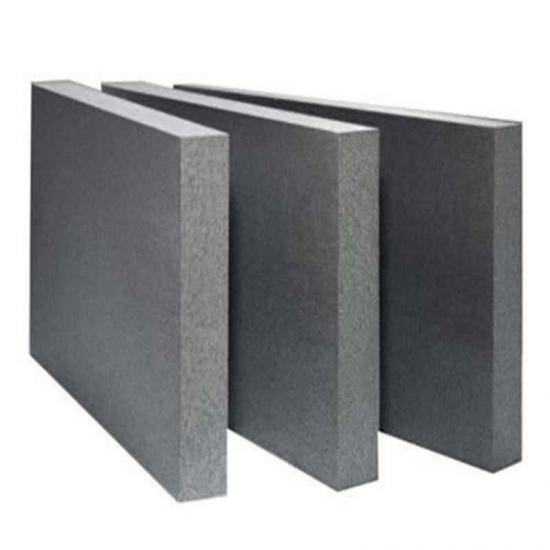
The foam features interconnected pores ranging from micrometers to millimeters. This structure offers high porosity (typically 70–95%), low density, and outstanding electrical conductivity due to the carbongraphite crystalline structure.
• Active Material Coating or Infiltration
Electrochemical materials—such as lithiumion cathodes, sulfur composite cathodes, metal anodes, or carbonbased anodes—are deposited onto or infused into the foam network. The 3D structure accommodates large amounts of active material while minimizing diffusion distance.
• Binder and Conductive Agents
Depending on the battery type, polymer binders (PVDF, CMC, SBR) or hybrid conductive additives may be used to enhance mechanical adhesion and electronic contact.
• Solid, Gel, or Liquid Electrolytes
Graphite foam is compatible with multiple electrolyte systems, including conventional carbonatebased electrolytes, ionic liquids, waterbased systems, and solidstate electrolytes.
• Current Collector Interface
Although graphite foam itself is conductive, it typically connects to external tabs or plates for electrical integration.
3. Material Properties and Performance Characteristics
• High Electrical Conductivity
Graphite foam provides excellent electron pathways, reducing internal resistance and improving highrate performance.
• Large Specific Surface Area
The 3D network allows efficient active material loading and enhances ion–electron contact.
• Superior Thermal Management
Graphite foam has high thermal conductivity, enabling rapid heat dissipation during highpower charge–discharge cycles.
• Lightweight Structure
Its low density significantly reduces battery weight while maintaining structural integrity.
• Chemical and Thermal Stability
Graphite foam remains stable across broad temperature ranges and is resistant to chemical degradation in most electrolyte systems.
4. Manufacturing and Processing Technology
Production of graphite foam battery electrodes involves:
• Graphite Foam Fabrication
Manufactured through chemical vapor deposition (CVD), pitchbased graphitization, or polymer pyrolysis, which creates a porous carbon skeleton.
• Active Material Impregnation
Active materials are introduced through slurry coating, vacuum infiltration, electrochemical deposition, melt infusion (for sulfur), or 3D printingassisted methods.
• Surface Modification
For enhanced wettability or chemical compatibility, the foam can be treated with plasma, oxidation, metal nanoparticle coating, or graphene deposition.
• Electrode Assembly
The processed foam is integrated into cell structures such as coin cells, pouch cells, cylindrical cells, or lab test cells.
Flame Retardant Graphene Foam
5. Applications
Graphite foam batteries are used across highperformance fields such as:
• HighPower LithiumIon Batteries
For drones, power tools, robotics, and electric vehicles requiring rapid charging and high discharge rates.
• SodiumIon and PotassiumIon Batteries
Where large ion species benefit from the foam’s open structure and improved diffusion.
• Lithium–Sulfur Batteries
Graphite foam suppresses polysulfide diffusion and enhances conductivity.
• Metal–Air and ZincBased Batteries
The 3D network provides structural support and large accessible surface area.
• ThermalManagementEnhanced Energy Systems
Graphite foam’s heat conduction makes it ideal for devices prone to heat accumulation.
• Research & Prototype Energy Storage
Widely used in laboratory studies exploring advanced electrode architectures.
6. Advantages
• Higher Power Density
3D conductivity enables extremely fast electron and ion transport.
• Improved Cycle Stability
The foam framework buffers volume changes of active materials, reducing mechanical degradation.
• Faster Charging Capability
Low resistance and high thermal conductivity allow safe highcurrent operation.
• Enhanced Safety
Efficient heat dissipation reduces thermal runaway risk.
• Lightweight and Flexible Design
Allows construction of ultralight or customshaped battery architectures.
• Efficient Material Utilization
Active materials coat the entire foam surface, increasing electrochemical efficiency.
Conclusion
The graphite foam battery represents a significant leap in energystorage technology by combining the electrochemical benefits of a porous 3D carbon architecture with the performance requirements of modern battery systems. Its unique structure, superior conductivity, thermal management capability, and compatibility with various battery chemistries make it a powerful material platform for nextgeneration highpower and highefficiency energy devices. As research and manufacturing capabilities continue to advance, graphite foam batteries are expected to play a vital role in future electric vehicles, aerospace systems, grid storage, and portable electronics.