Xiamen TJ Metal Material Co., Ltd. (referred to as TJ Company) was established in 2009 and is now an important private backbone enterprise in Fujian Province, headquartered in Xiamen City, Fujian Province.
Ultramet Carbon Foam: Advanced Engineering Material for High-Performance Mechanical Equipment
Ultramet carbon foam has become a leading high-performance material widely adopted in advanced mechanical systems, energy devices, and industrial engineering applications. Known for its exceptional structural uniformity, ultra-high porosity, and superior thermal and electrical conductivity, Ultramet carbon foam provides performance advantages that traditional foams, graphite plates, or metallic substrates cannot match. As industries demand lighter, more efficient, and more durable components, mechanical equipment manufacturers increasingly incorporate Ultramet carbon foam into critical systems to enhance operational reliability and improve thermal and electrical performance.
1. Material Characteristics of Ultramet Carbon Foam
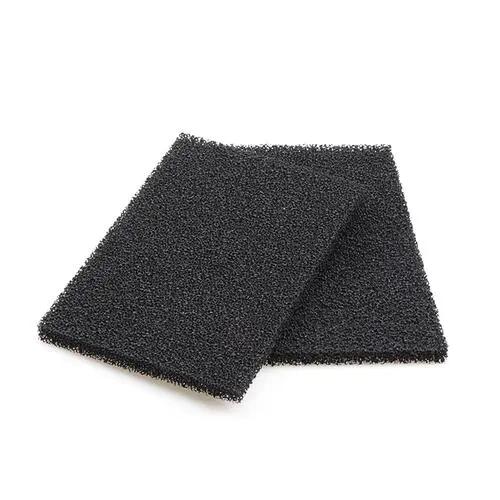
Ultramet carbon foam is a three-dimensional open-cell carbon material manufactured through highly controlled processing technologies. Unlike conventional carbon foam, Ultramet’s proprietary manufacturing offers precise pore uniformity and enhanced structural integrity across a wide density range.
Key Material Advantages
* High Thermal Conductivity
The continuous carbon ligaments provide efficient heat transfer, making it ideal for heat exchangers, furnace systems, and high-temperature aerospace components.
* Excellent Electrical Conductivity
The interconnected carbon network supports uniform current distribution, enabling use in batteries, fuel cells, and high-power electrodes.
* Ultra-High Porosity (up to 97%)
The open-cell structure improves fluid flow, gas diffusion, and thermal dispersion in mechanical and chemical equipment.
* High Strength-to-Weight Ratio
The foam remains lightweight yet mechanically robust, contributing to the development of compact and energy-efficient machines.
* Thermal and Chemical Stability
Ultramet carbon foam maintains structural integrity in extreme environments, including vacuum, high-temperature inert atmospheres, and corrosive chemical exposure.
These unique properties make the material suitable for various mechanical engineering applications requiring precise thermal, structural, or electrochemical performance.
2. Mechanical Equipment That Utilizes Ultramet Carbon Foam
a. High-Temperature Furnace and Thermal Processing Equipment
Ultramet carbon foam is frequently used in advanced furnace systems, including:
* Microwave sintering furnaces
* Vacuum and inert gas furnaces
* Rapid thermal processing (RTP) units
* High-temperature reactors
Its thermal conductivity ensures uniform heating, while the porous framework minimizes thermal stress. Mechanical components such as insulation panels, heat spreaders, and thermal supports often incorporate Ultramet carbon foam to enhance processing efficiency and extend equipment lifespan.
b. Battery Manufacturing and Energy Storage Systems
In energy equipment engineering, Ultramet carbon foam serves as an excellent conductive substrate for:
* Lithium-ion battery electrodes
* Solid-state battery collectors
* Lead-carbon hybrid battery plates
* Supercapacitor frameworks
Its large surface area and low internal resistance improve charge transport and increase electrode stability. Battery production machinery—such as slurry mixers, coating systems, calendering machines, and electrolyte-filling equipment—benefits from integrating foam-based electrodes that promote consistent electrical performance and faster cycling.
c. Fuel Cell and Hydrogen Equipment
Ultramet carbon foam plays an essential role in hydrogen fuel systems and electrochemical reactors:
* Gas diffusion layers (GDL)
* Catalyst supports
* Current collectors
Its open pores enhance reactant flow and water management, while its conductivity improves electrochemical efficiency. Mechanical equipment for membrane electrode assembly (MEA) production often incorporates Ultramet carbon foam components to maximize power density and durability.
d. Filtration, Chemical Processing, and Flow Systems
The controlled pore structure makes Ultramet carbon foam ideal for mechanical filtration and fluid control devices:
* Molten metal filtration units
* High-temperature gas purification reactors
* Chemical flow distribution systems
The foam structure ensures uniform flow distribution and reduces pressure drop, improving the efficiency of industrial filtration machinery.
e. Thermal Management and Cooling Systems
Advanced cooling equipment for electronics, lasers, aerospace modules, and high-power machinery often uses Ultramet carbon foam as:
* Heat sinks
* Vapor chamber cores
* Phase-change cooling substrates
Its ability to dissipate heat rapidly helps prevent equipment overheating and improves long-term operational stability.
Carbon Metal Foam
3. Manufacturing Equipment for Ultramet Carbon Foam Processing
Producing Ultramet carbon foam and integrating it into mechanical equipment require precise, high-performance processing tools:
* Polymer foam impregnation systems
Ensure consistent precursor distribution prior to carbonization.
* Controlled-atmosphere carbonization furnaces
Convert polymers into ultra-pure carbon foam structures.
* Graphitization furnaces
Enhance carbon crystallinity, conductivity, and mechanical stability.
* CNC machining and laser cutting systems
Shape and dimension foam components without damaging pore architecture.
* Surface treatment and coating equipment
Improve compatibility with active materials or protective layers.
These specialized machines ensure that Ultramet carbon foam achieves the structural and functional consistency required for high-end industrial applications.
4. Benefits for Modern Industrial Machinery
Integrating Ultramet carbon foam into mechanical systems provides several engineering advantages:
* Improved thermal uniformity in heat treatment equipment
* Reduced equipment weight without sacrificing strength
* Enhanced electrical efficiency in energy devices
* Extended operating life under extreme conditions
* Superior design flexibility for complex mechanical assemblies
As industries pursue energy-efficient, lightweight, and durable solutions, Ultramet carbon foam continues to gain traction as a preferred material for next-generation equipment design.