Xiamen TJ Metal Material Co., Ltd. (referred to as TJ Company) was established in 2009 and is now an important private backbone enterprise in Fujian Province, headquartered in Xiamen City, Fujian Province.
Open Cell Copper Foam: Advanced Experimental Material for Thermal, Energy, and Functional Applications
Overview
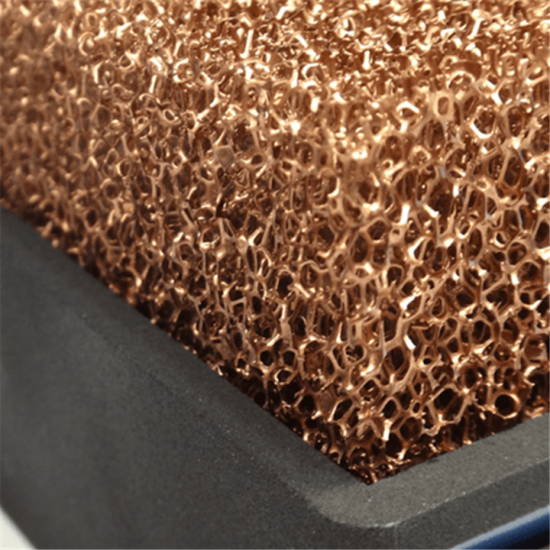
Open cell copper foam is a high-performance experimental material characterized by a three-dimensional network of interconnected pores within a metallic copper structure. Unlike traditional solid copper, open cell copper foam combines the excellent thermal and electrical conductivity of copper with the lightweight, porous structure of foam. This unique combination enables efficient heat dissipation, enhanced surface area, and fluid permeability, making it ideal for research applications in electronics cooling, energy storage, catalysis, and filtration.
In experimental research, open cell copper foam serves as a versatile platform for studying thermal transport, electrochemical behavior, and fluid dynamics. Its porous structure allows researchers to optimize material properties for high-performance applications while maintaining lightweight and mechanically robust characteristics.
Features
Open cell copper foam possesses several distinguishing features that make it a valuable material in experimental and functional applications:
1. High Thermal Conductivity
Copper’s inherent thermal conductivity (~400 W/m·K) enables rapid heat transfer from heat sources to surrounding environments, crucial for cooling experiments.
2. Electrical Conductivity
The continuous metallic network allows for efficient electron transport, useful for electrochemical applications, electrodes, and sensors.
3. Porous 3D Structure
Interconnected open cells provide high surface area and allow fluid penetration, enhancing convective heat transfer, filtration, and catalytic reactions.
4. Lightweight and Strong
Open cell architecture reduces material density while maintaining mechanical stability, making it suitable for compact or lightweight experimental setups.
5. Customizable Pore Size and Porosity
Researchers can tailor the foam’s pore size, thickness, and overall porosity to achieve specific thermal, electrical, or fluidic performance.
6. Corrosion Resistance and Durability
Copper’s chemical stability ensures the foam maintains performance under thermal cycling, oxidation, and mechanical stress.
Fabrication Process
Open cell copper foam is produced using specialized manufacturing techniques designed to create uniform pore structures and optimal thermal properties:
1. Polymer Template Method
A polymer foam template is coated with copper using electroplating, chemical vapor deposition, or powder metallurgy. After copper deposition, the polymer is removed via thermal decomposition or chemical etching, leaving behind a porous copper network.
2. Powder Metallurgy
Copper powders are pressed and sintered with spacers to form a porous structure, by post-processing to achieve open cell connectivity.
3. Metal Foaming
Copper is foamed directly by incorporating gas-releasing agents into molten copper, creating a continuous network of open cells upon solidification.
4. Post-Processing
Sintering, heat treatment, and surface finishing improve structural integrity, uniformity, and thermal conductivity, optimizing the foam for experimental use.
Ultra High Conductivity Copper Foam
Applications
Open cell copper foam has a wide range of experimental and functional applications:
* Thermal Management
Used in electronics, LEDs, and battery systems for heat dissipation and high-flux cooling experiments.
* Electrochemical Research
Serves as electrodes or current collectors in batteries, supercapacitors, and fuel cells due to high surface area and conductivity.
* Catalysis and Chemical Engineering
Functions as a support for catalytic materials, enhancing reaction efficiency through increased surface area and fluid flow.
* Filtration and Environmental Studies
Porous structure allows air and liquid filtration experiments, including pollutant removal and microbial control.
* Energy Systems
Applied in research on phase change materials, heat exchangers, and compact cooling devices where high surface area and lightweight properties are essential.
Advantages
Open cell copper foam provides several advantages over conventional materials:
1. Superior Thermal Performance
Combined conduction and convection within the porous network enable efficient heat removal from high-flux regions.
2. High Surface Area
Maximizes interaction with fluids or reactants, enhancing electrochemical, catalytic, and filtration performance.
3. Lightweight and Structurally Robust
Reduces mass while maintaining mechanical integrity for experimental or prototype applications.
4. Customizability
Adjustable pore size, porosity, and thickness allow optimization for specific experimental objectives.
5. Durability and Stability
Resistant to corrosion, thermal cycling, and mechanical stress, ensuring reliable long-term performance.
6. Versatility
Suitable for thermal, electrochemical, catalytic, and fluid dynamic experiments, supporting multidisciplinary research.
Conclusion
Open cell copper foam is an advanced experimental material that combines the excellent thermal and electrical conductivity of copper with the lightweight, high-surface-area structure of foam. Its unique features, including customizable pore structure, mechanical stability, and fluid permeability, make it ideal for research in thermal management, energy storage, catalysis, and filtration.
By providing a flexible, high-performance platform for experiments, open cell copper foam enables researchers to develop novel prototypes, optimize functional properties, and explore innovative solutions in electronics, energy systems, and chemical processes. Its combination of conductivity, porosity, and durability makes it a critical material for advancing experimental research and developing next-generation functional devices.