Xiamen TJ Metal Material Co., Ltd. (referred to as TJ Company) was established in 2009 and is now an important private backbone enterprise in Fujian Province, headquartered in Xiamen City, Fujian Province.
Copper Foam Heatsink: Advanced Experimental Material for Thermal Management
Overview
Copper foam heatsinks are innovative experimental materials designed to address high-performance thermal management challenges. Unlike traditional solid copper heatsinks, copper foam heatsinks combine the superior thermal conductivity of copper with a lightweight, porous, three-dimensional network structure. The open-cell architecture increases surface area, promotes convective heat transfer, and allows fluids—such as air or liquid coolant—to flow through the material, enhancing overall heat dissipation efficiency.
In experimental research, copper foam heatsinks are widely used for testing thermal management strategies in electronics, battery systems, LEDs, and other high-heat-flux applications. Their unique combination of thermal performance, lightweight structure, and fluid compatibility makes them a versatile platform for both laboratory experiments and prototype development.
Features
Copper foam heatsinks exhibit several critical features that distinguish them from conventional heatsinks:
1. High Thermal Conductivity
Copper’s natural conductivity (~400 W/m·K) ensures rapid heat transfer from heat-generating components to the surrounding environment.
2. Porous 3D Structure
The open-cell network provides high surface area and enhances convective heat transfer with air or liquids.
3. Lightweight Design
Reduced density compared to solid copper reduces overall weight, beneficial for portable electronics, aerospace, and lightweight experimental setups.
4. Customizable Geometry and Porosity
Foam thickness, cell size, and porosity can be tailored to meet specific heat dissipation requirements or experimental objectives.
5. Mechanical Stability and Durability
Copper foam maintains its structural integrity under thermal cycling, mechanical stress, and oxidation conditions, ensuring reliable performance during testing.
6. Compatibility with Cooling Media
Open cells allow airflow or liquid coolant to penetrate, improving heat exchange and enabling hybrid cooling strategies.
Fabrication Process
Copper foam heatsinks are manufactured using several experimental and industrial techniques to optimize their thermal performance:
1. Template Replication Method
A polymer foam template is coated with copper using electroplating, electroless deposition, or chemical vapor deposition. The template is then removed via thermal decomposition, leaving a uniform porous copper structure.
2. Powder Metallurgy
Copper powders are mixed with foaming agents or spacers, pressed, and sintered to create a three-dimensional porous network with controlled connectivity.
3. Direct Foaming
Molten copper is foamed using gas-releasing agents, generating an open-cell structure after solidification.
4. Post-Processing
Sintering, heat treatment, and surface finishing improve structural integrity, pore uniformity, and thermal performance for experimental use.
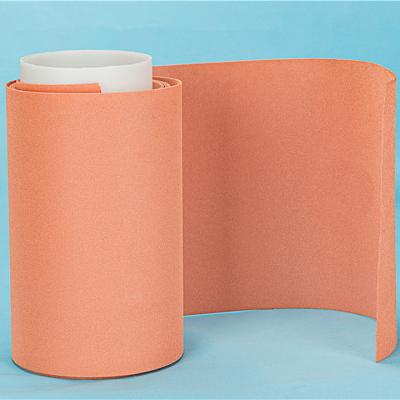
Copper Foam Cu Foam
Applications
Copper foam heatsinks are used extensively in experimental and applied thermal management studies:
* Electronics Cooling
Efficiently dissipates heat from high-power CPUs, GPUs, LEDs, and other electronic devices in laboratory testing.
* Battery Thermal Management
Maintains uniform temperatures in lithium-ion, sodium-ion, and solid-state batteries, preventing thermal runaway and improving performance in experimental prototypes.
* Heat Exchangers
Open-cell copper foams serve as experimental platforms for studying convective heat transfer in air or liquid cooling systems.
* Aerospace and Portable Devices
Lightweight copper foam heatsinks are tested in environments where weight reduction and high thermal efficiency are critical.
* Research in Thermal Fluids and Heat Transfer
Provides a model material for investigating flow patterns, pressure drops, and convective heat transfer in porous media.
Advantages
Copper foam heatsinks offer multiple advantages over conventional solid or finned heatsinks:
1. Superior Heat Dissipation
Combined conduction and convection within the porous network remove heat more effectively than solid copper alone.
2. Lightweight
Reduces mass without compromising thermal performance, suitable for aerospace, electronics, and portable device experiments.
3. High Surface Area
Promotes improved interaction with cooling fluids, enhancing overall heat transfer efficiency.
4. Customizable Design
Pore size, foam density, and thickness can be adjusted to meet specific experimental or application requirements.
5. Durable and Chemically Stable
Resists thermal cycling, oxidation, and mechanical stress, ensuring reliable performance over time.
6. Versatile Experimental Platform
Suitable for testing thermal management strategies across electronics, battery systems, fluid dynamics, and energy devices.
Conclusion
Copper foam heatsinks are advanced experimental materials that combine copper’s excellent thermal conductivity with a lightweight, porous, and tunable structure. Their open-cell design allows efficient conduction and convection, enabling high-performance heat dissipation in electronics, batteries, and energy systems.
By offering customizable geometry, mechanical stability, and compatibility with cooling media, copper foam heatsinks provide researchers with a versatile platform for thermal management experiments and prototype development. Their multifunctionality, efficiency, and durability make copper foam heatsinks a crucial material for advancing experimental research and designing next-generation high-performance thermal solutions.