Xiamen TJ Metal Material Co., Ltd. (referred to as TJ Company) was established in 2009 and is now an important private backbone enterprise in Fujian Province, headquartered in Xiamen City, Fujian Province.
Copper Foam Buy: A Comprehensive Guide to Advanced Experimental Material
Overview
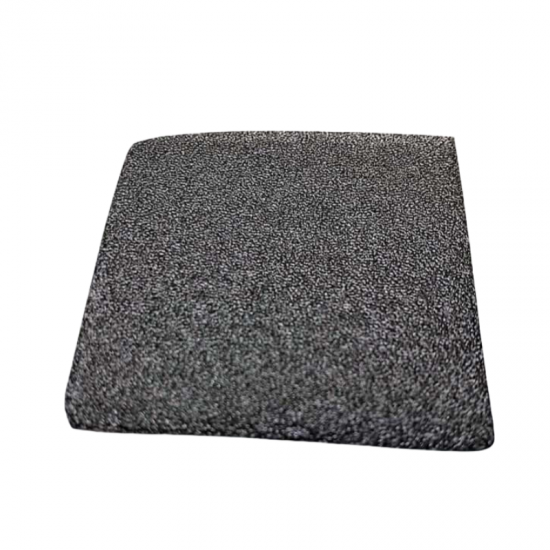
Copper foam is a highly porous, lightweight, and conductive metallic material characterized by a three-dimensional network of interconnected ligaments. This material uniquely combines the superior thermal and electrical conductivity of copper with the structural advantages of foam, including high surface area, low density, and fluid permeability. Researchers and engineers frequently seek to buy copper foam for experimental applications in thermal management, energy storage, catalysis, filtration, and fluid dynamics. The availability of commercial copper foams ensures consistent quality, precise specifications, and reliable performance for laboratory and prototype development.
Copper foam has emerged as an essential material in experimental research due to its multifunctional properties. It allows scientists to study heat transfer, electrochemical behavior, and fluid interactions while offering a lightweight and mechanically robust platform for material innovation. Access to high-quality copper foam from reliable suppliers ensures reproducibility and accuracy in experimental results.
Features
Copper foam exhibits several defining features that make it highly suitable for experimental and functional applications:
1. High Thermal Conductivity
Copper’s inherent thermal conductivity (~400 W/m·K) allows rapid heat transfer, making copper foam ideal for thermal management experiments and electronic cooling.
2. Electrical Conductivity
The continuous copper network enables efficient electron transport, supporting electrochemical applications such as electrodes, battery scaffolds, and sensors.
3. Porous Three-Dimensional Structure
Interconnected open cells create a large surface area, facilitating convective heat transfer, filtration, and catalysis.
4. Lightweight and Mechanically Robust
Reduced material density combined with structural stability allows its use in compact, lightweight experimental setups.
5. Customizable Porosity and Pore Size
Pore diameter, density, and overall porosity can be tailored to meet specific experimental or application requirements.
6. Chemical Stability and Durability
Copper foam maintains performance under thermal cycling, mechanical stress, and oxidation conditions, ensuring reliability in research applications.
Fabrication Process
Copper foams are produced using specialized techniques to create uniform pore structures and optimize functional performance:
1. Template Replication
A polymer foam template is coated with copper via electroplating, electroless deposition, or chemical vapor deposition. After copper deposition, the polymer template is removed by thermal decomposition, leaving a porous metallic network.
2. Powder Metallurgy
Copper powders are mixed with spacers or foaming agents, compacted, and sintered to create an interconnected porous structure.
3. Direct Foaming
Molten copper is foamed using gas-releasing agents, producing open-cell or closed-cell foam structures upon solidification.
4. Post-Processing
Sintering, heat treatment, and surface finishing enhance structural integrity, uniformity, and thermal conductivity, ensuring optimal performance for experimental use.
Experiment Graphene Foam
Applications
Copper foam is widely applied in laboratory research and experimental development:
* Thermal Management
Used in electronics, LEDs, and battery systems to efficiently dissipate heat and maintain uniform temperatures.
* Energy Storage and Electrochemical Devices
Functions as a scaffold or current collector in lithium-ion, sodium-ion, and solid-state batteries and supercapacitors.
* Catalysis
Provides a high-surface-area support for catalytic reactions, improving conversion efficiency and material utilization.
* Filtration and Environmental Research
Porous structure allows air and liquid filtration studies, including contaminant removal and microbial control experiments.
* Fluid Dynamics and Heat Transfer Studies
Serves as a model material to study convective flow, pressure drop, and thermal transport in porous media.
Advantages
Purchasing high-quality copper foam for experimental research offers several benefits:
1. Reliable Thermal and Electrical Performance
High conductivity ensures effective heat and electron transport for experimental and functional applications.
2. Lightweight and Structurally Stable
Maintains mechanical integrity while reducing mass, ideal for compact systems.
3. High Surface Area
Enhances fluid interaction, catalytic activity, and electrochemical efficiency.
4. Customizable Properties
Pore size, density, and thickness can be selected to meet specific research needs.
5. Durable and Chemically Resistant
Suitable for harsh laboratory conditions, including repeated thermal cycling and oxidation.
6. Versatile Research Platform
Supports thermal, electrochemical, catalytic, filtration, and fluid flow experiments, enabling multidisciplinary investigations.
Conclusion
Copper foam is an advanced experimental material that merges copper’s excellent thermal and electrical properties with a lightweight, porous, and tunable structure. Researchers looking to buy copper foam can access high-quality materials that enable precise experimental studies, prototype development, and innovation across electronics, energy systems, catalysis, and filtration.
By offering high surface area, mechanical robustness, and multifunctionality, copper foam provides an essential platform for advancing experimental research and developing next-generation functional devices. Reliable sourcing ensures consistency, reproducibility, and performance, making copper foam a critical material for modern experimental and applied science.