Xiamen TJ Metal Material Co., Ltd. (referred to as TJ Company) was established in 2009 and is now an important private backbone enterprise in Fujian Province, headquartered in Xiamen City, Fujian Province.
Carbon Foam Manufacturers: Essential Laboratory Materials for Advanced Research and Innovation
As advanced materials research accelerates across energy storage, thermal engineering, catalysis, and electrochemical science, carbon foam has become an indispensable laboratory material. Known for its three-dimensional porous structure, excellent thermal conductivity, high electrical performance, and chemical stability, carbon foam is widely used in experiments that require precise control of heat, electricity, and fluid dynamics. Today’s leading carbon foam manufacturers play a pivotal role in supplying high-quality foam materials tailored for laboratory environments, ensuring researchers have reliable substrates for testing, prototyping, and scientific development.
1. Understanding Carbon Foam as a Laboratory Material
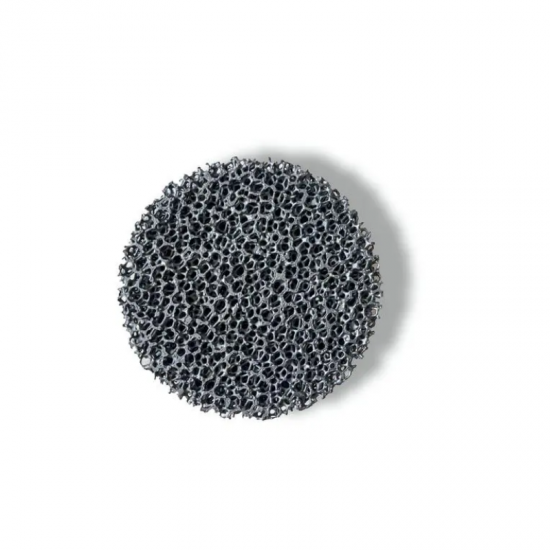
Carbon foam is an open-cell, lightweight carbon-based structure with porosity often exceeding 90%. This reticulated network enables remarkable multifunctionality compared to conventional carbon plates, metal foams, or graphite blocks. Laboratory-grade carbon foam typically features:
* Highly uniform pore size (PPI 10–100)
* Low density and high specific surface area
* Excellent electrical conductivity for electrochemical applications
* High thermal diffusivity suitable for heat-transfer studies
* Resistance to oxidation and chemical corrosion
* Mechanical stability in high-temperature and inert environments
Due to these attributes, carbon foam is frequently selected by research institutions and laboratories engaged in material science, battery development, catalytic studies, and thermal management experiments.
2. The Role of Carbon Foam Manufacturers in R&D
Leading carbon foam manufacturers supply laboratory materials with precise specifications to meet diverse experimental requirements. Their responsibilities include:
a. Custom Pore Architecture and Density Control
For different research tasks, scientists may require foam with specific pore sizes or densities. Manufacturers use advanced templating, carbonization, and graphitization technologies to fine-tune pore uniformity and mechanical strength.
b. High-Purity Carbon Processing
Impurities can compromise electrochemical or thermal tests. Manufacturers ensure controlled atmospheres during carbonization to achieve high-purity, laboratory-grade carbon foam.
c. Machining and Dimensional Accuracy
Many experiments require precise foam dimensions. CNC machining, laser shaping, and waterjet cutting enable custom sample sizes without damaging the delicate pore structure.
d. Surface Modification and Chemical Treatment
To adapt foam for electrode research, catalyst loading, or sensor development, manufacturers may provide surface treatments including oxidation, electroplating, or graphene coating.
e. Quality Control and Certification
Laboratories rely on materials that meet strict performance metrics. Carbon foam manufacturers conduct pore-size analysis, mechanical testing, thermal conductivity measurement, and resistivity inspection to ensure consistency.
These capabilities allow manufacturers to support advanced R&D projects while meeting the expectations of scientific laboratories worldwide.
Electrode Material
3. Laboratory Applications of Carbon Foam
Carbon foam is an essential component in many experimental setups. Its wide range of properties enables scientific investigation in fields such as electrochemistry, thermal engineering, catalysis, and mechanical testing.
a. Electrochemical Research
Carbon foam’s high electrical conductivity and large active surface area make it an exceptional electrode material in:
* Battery prototypes (lithium-ion, sodium-ion, lead-carbon, solid-state)
* Supercapacitor development
* Water-splitting and electrolysis research
* Fuel cell testing
The open-cell structure enhances ion and electron transport, helping researchers evaluate next-generation electrode formulations and energy-storage mechanisms.
b. Thermal Conductivity and Heat Transfer Experiments
Laboratories studying advanced cooling systems or heat dissipation technologies often use carbon foam in:
* High-temperature furnace components
* Experimental heat exchangers
* Thermal insulation and diffusion modules
Its ability to withstand extreme temperatures while maintaining stable thermal conductivity makes it ideal for controlled heat-transfer experiments.
c. Catalysis and Chemical Reaction Studies
Carbon foam is widely used as a catalyst support material, thanks to its high porosity and chemical inertness. It enables:
* Metal catalyst deposition
* Gas-phase reaction testing
* Environmental and emissions studies
* Flow-through reactor prototypes
Manufacturers often produce specialized foam types optimized for catalytic experiments, including surface-activated or nano-coated variants.
d. Structural and Mechanical Testing
With a high strength-to-weight ratio, carbon foam is also used for:
* Mechanical compression and stress-response testing
* Composite material development
* Structural research in aerospace and automotive R&D
Its customizable pore structures allow scientists to investigate load-bearing mechanisms in porous materials.
4. How Carbon Foam Manufacturers Support Innovation
The collaboration between laboratories and carbon foam manufacturers fosters innovation across scientific disciplines. By offering tailored material solutions, manufacturers enable:
* More accurate and reproducible experimental results
* Faster material prototyping cycles
* Reduced research costs through stable supply chains
* Access to emerging carbon structures with enhanced properties
Many manufacturers also work directly with research institutions to co-develop advanced foam materials, contributing to breakthroughs in battery design, reactor engineering, and thermal management technologies.
5. Choosing the Right Carbon Foam Supplier for Laboratory Use
When selecting a carbon foam manufacturer for laboratory materials, researchers typically consider:
* Pore size accuracy and structural uniformity
* Thermal and electrical property certification
* Material purity and chemical stability
* Custom machining availability
* Consistency across production batches
Reliable suppliers provide detailed technical datasheets and performance metrics, ensuring experimental precision and repeatability.