Xiamen TJ Metal Material Co., Ltd. (referred to as TJ Company) was established in 2009 and is now an important private backbone enterprise in Fujian Province, headquartered in Xiamen City, Fujian Province.
Copper Foam Sheet: Advanced Porous Material for Multifunctional Applications
Overview
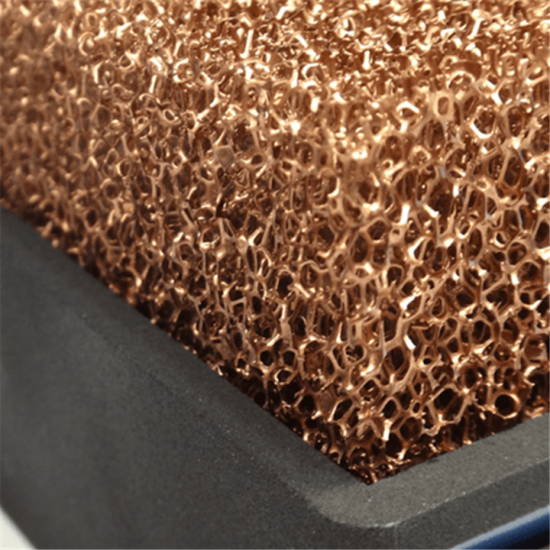
A copper foam sheet is a flat, porous metallic material that combines the inherent properties of copper—such as excellent electrical and thermal conductivity—with a lightweight, high-surface-area structure. Unlike conventional solid copper plates or meshes, copper foam sheets feature a three-dimensional network of interconnected copper ligaments and open cells, offering superior functionality in a compact form factor. This combination of properties makes copper foam sheets highly valuable in energy storage, thermal management, catalysis, filtration, and electronic applications. With industries increasingly demanding materials that are efficient, durable, and multifunctional, copper foam sheets have emerged as a key solution in advanced engineering applications.
Material Characteristics and Properties
The most notable characteristic of a copper foam sheet is its high porosity, typically ranging from 70% to over 95%, which provides a large specific surface area while maintaining sufficient mechanical strength. The open-cell structure allows efficient fluid and gas transport, enhancing heat transfer, mass transfer, and electrochemical performance.
Copper foam sheets exhibit excellent electrical conductivity due to the continuous metallic network, making them ideal for current collectors in batteries, supercapacitors, and electronic devices. Thermally, they provide efficient heat dissipation and uniform temperature distribution, which is crucial for heat exchangers, cooling plates, and high-power electronic systems. Mechanically, copper foam sheets offer moderate compressive strength and energy absorption, making them suitable for vibration damping and impact-resistant applications. Additionally, the material demonstrates chemical stability and corrosion resistance, ensuring reliable performance in harsh environments.
Manufacturing and Processing Technology
Copper foam sheets are produced using several methods, each designed to control pore size, density, and structural uniformity. One common approach is the polymer template replication method. In this process, a polymer foam template is coated with copper using electroplating or chemical deposition, and the polymer is then removed through thermal decomposition, leaving behind a copper foam network that retains the template’s structure.
Powder metallurgy is another widely used technique. Copper powders are mixed with space-holding agents, compacted into sheet form, and sintered at high temperatures. The space-holding agents are subsequently removed, creating a uniform porous structure. Advanced techniques, such as electrodeposition, additive manufacturing, and gas entrapment methods, allow precise control of pore architecture, density, and surface properties.
Post-processing treatments—including surface modification, coatings, and precision cutting—enable customization of copper foam sheets for specific performance requirements, such as enhanced corrosion resistance, improved conductivity, or integration with active materials in energy devices.
Applications Across Industries
Copper foam sheets are highly versatile and find applications across multiple sectors. In energy storage systems, they serve as current collectors and electrode scaffolds in lithium-ion, sodium-ion, and metal-air batteries. Their porous structure facilitates electrolyte penetration and ion transport, while the continuous copper network ensures efficient electron conduction, improving energy density, cycle life, and rate capability. In supercapacitors, copper foam sheets provide a high-surface-area substrate for active material deposition, enabling rapid charge–discharge cycles and high power output.
In thermal management, copper foam sheets are used in heat exchangers, cooling plates, and heat sinks. Their high thermal conductivity and open-cell structure enable efficient heat dissipation and fluid flow, outperforming traditional solid copper components in high-power and high-temperature systems.
Copper foam sheets are also applied in catalysis and chemical processing as supports for catalysts or reaction media, benefiting from their large surface area, chemical stability, and thermal resistance. Additional applications include filtration, electromagnetic shielding, vibration damping, and lightweight structural components for aerospace and automotive industries.
Ultra High Conductivity Copper Foam
Advantages of Copper Foam Sheets
The primary advantage of copper foam sheets is their multifunctionality. They combine electrical conductivity, thermal management, structural support, and chemical stability within a single material, reducing the need for multiple components in complex systems. Their lightweight nature contributes to reduced system weight, which is essential in aerospace, transportation, and portable electronics applications.
Copper foam sheets also offer design flexibility. Parameters such as pore size, thickness, density, and surface finish can be customized to meet specific application requirements. The material is durable, corrosion-resistant, and capable of maintaining stable performance under thermal cycling and mechanical stress. While the initial cost may be higher than solid copper sheets, the long-term performance benefits, efficiency gains, and reduced material usage often justify the investment.
Conclusion
Copper foam sheets represent a versatile and high-performance porous material that combines the advantages of copper with a lightweight, open-cell structure. Their excellent electrical and thermal conductivity, mechanical stability, and large surface area make them ideal for applications in energy storage, thermal management, catalysis, and industrial filtration. With their multifunctionality, customization potential, and long-term durability, copper foam sheets are poised to play an increasingly important role in next-generation industrial and electronic systems.