Xiamen TJ Metal Material Co., Ltd. (referred to as TJ Company) was established in 2009 and is now an important private backbone enterprise in Fujian Province, headquartered in Xiamen City, Fujian Province.
Carbon Fiber Foam: A Lightweight and High-Performance Advanced Carbon Material
Overview
Carbon fiber foam is an advanced porous carbon material that combines the exceptional mechanical and functional properties of carbon fibers with the three-dimensional cellular structure of foam. Unlike conventional polymer foams or traditional carbon foams, carbon fiber foam is reinforced by an interconnected network of carbon fibers, resulting in a material that offers high strength-to-weight ratio, excellent thermal and electrical conductivity, and outstanding structural stability. This unique combination makes carbon fiber foam highly attractive for demanding applications in energy storage, aerospace, transportation, electronics, and high-temperature industrial environments. As industries continue to seek lightweight, durable, and multifunctional materials, carbon fiber foam is increasingly recognized as a next-generation solution.
Material Characteristics and Properties
The defining feature of carbon fiber foam is its hybrid structure, where carbon fibers act as a reinforcing skeleton within a porous foam matrix. This structure typically exhibits high porosity, often exceeding 80%, while maintaining superior mechanical integrity compared to conventional foams. The presence of carbon fibers significantly enhances compressive strength, stiffness, and fatigue resistance, enabling the material to withstand mechanical stress and repeated loading.
From an electrical standpoint, carbon fiber foam demonstrates excellent conductivity due to the continuous carbon fiber network. This property is particularly valuable in electrochemical and electromagnetic applications. Thermally, carbon fiber foam provides efficient heat dissipation and thermal stability across a wide temperature range, including high-temperature environments where polymer-based materials fail.
Carbon fiber foam also exhibits strong chemical resistance and low thermal expansion. It remains stable in corrosive atmospheres and under repeated thermal cycling, making it suitable for harsh operating conditions. Additionally, its open-cell structure allows for efficient fluid flow, gas diffusion, and material impregnation.
Manufacturing and Processing Technology
The production of carbon fiber foam involves a carefully controlled process that integrates fiber reinforcement with foam formation. Common manufacturing routes begin with the dispersion of chopped carbon fibers or carbon fiber felts into a polymeric or pitch-based precursor. This mixture is then foamed using physical or chemical blowing agents to create a uniform cellular structure.
Following foaming, the material undergoes curing to stabilize the foam architecture. The cured composite is then subjected to carbonization in an inert atmosphere, typically at temperatures between 800°C and 1200°C, converting the organic components into a carbon matrix while retaining the fiber-reinforced structure. For applications requiring higher conductivity or crystallinity, a graphitization step at temperatures above 2000°C may be employed.
Post-processing techniques such as surface activation, resin or metal impregnation, and precision machining allow carbon fiber foam to be tailored into specific shapes and dimensions. These processes enable customization of density, pore size, and functional properties to meet diverse application requirements.
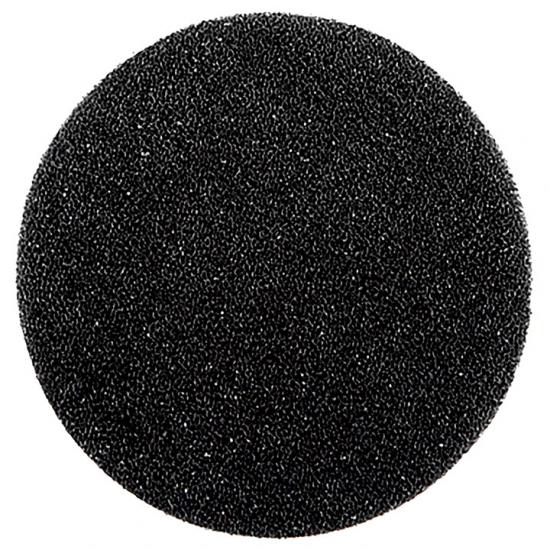
3D Pore size Carbon Foam
Applications in Advanced Technologies
Carbon fiber foam is widely used in energy storage systems, including lithium-ion, sodium-ion, and metal-air batteries, where it serves as a lightweight current collector or electrode scaffold. Its porous structure facilitates electrolyte penetration and ion transport, while the carbon fiber network ensures efficient electron conduction and mechanical stability.
In aerospace and transportation industries, carbon fiber foam is valued for its lightweight and high-strength characteristics. It is used in structural cores, thermal insulation panels, vibration damping components, and electromagnetic shielding. In electronics and power systems, carbon fiber foam functions as heat spreaders, thermal management components, and conductive supports.
Additionally, carbon fiber foam is employed in chemical processing and environmental applications, such as catalyst supports, filtration media, and gas diffusion layers. Its corrosion resistance and high surface area make it suitable for long-term operation in aggressive chemical environments.
Key Advantages of Carbon Fiber Foam
One of the primary advantages of carbon fiber foam is its exceptional strength-to-weight ratio. By integrating carbon fibers into a foam structure, the material achieves superior mechanical performance without significantly increasing density. This advantage is critical for applications where weight reduction directly impacts efficiency and performance.
Another major benefit is multifunctionality. Carbon fiber foam simultaneously provides mechanical support, electrical conductivity, thermal management, and chemical stability, reducing the need for multiple materials in a single system. Its customizable structure allows engineers to optimize performance parameters such as porosity, stiffness, and conductivity.
From a lifecycle perspective, carbon fiber foam offers excellent durability, long service life, and resistance to degradation under thermal, mechanical, and chemical stress. These characteristics contribute to lower maintenance requirements and improved overall system reliability.
Conclusion
Carbon fiber foam represents a sophisticated evolution of carbon-based materials, combining the reinforcing power of carbon fibers with the versatility of foam structures. Through its unique combination of lightweight design, mechanical strength, and functional performance, carbon fiber foam continues to enable innovation across energy, aerospace, electronics, and industrial sectors.