Xiamen TJ Metal Material Co., Ltd. (referred to as TJ Company) was established in 2009 and is now an important private backbone enterprise in Fujian Province, headquartered in Xiamen City, Fujian Province.
Carbon Foam Sheet: A High-Performance Porous Carbon Material for Advanced Applications
Overview
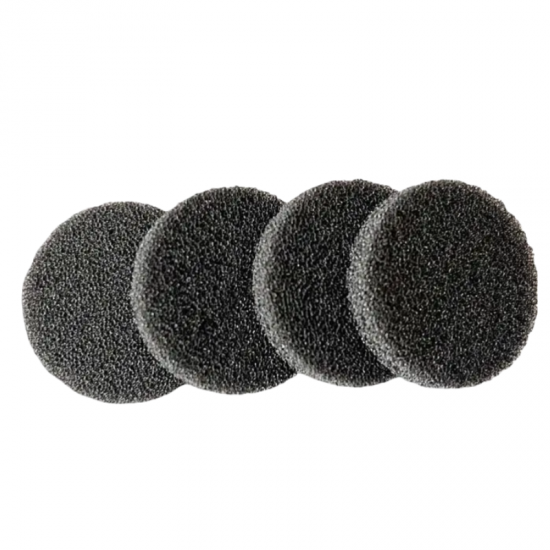
A carbon foam sheet is a lightweight, porous carbon material manufactured in flat or plate-like form, combining the intrinsic advantages of carbon materials with a three-dimensional cellular structure. Unlike conventional dense carbon plates or carbon fiber laminates, carbon foam sheets feature an interconnected network of carbon ligaments and pores, providing exceptional surface area, low density, and high functional versatility. These characteristics make carbon foam sheets highly attractive for applications requiring electrical conductivity, thermal management, structural stability, and chemical resistance. As advanced industries such as energy storage, aerospace, electronics, and chemical processing continue to evolve, carbon foam sheets are increasingly recognized as a next-generation functional material.
Material Characteristics and Properties
Carbon foam sheets are defined by their high porosity, typically ranging from 70% to over 95%, depending on formulation and processing conditions. This porous architecture allows for excellent permeability to gases and liquids while maintaining a continuous conductive carbon framework. The density of carbon foam sheets is significantly lower than that of traditional graphite or metal sheets, contributing to lightweight system designs.
From an electrical perspective, carbon foam sheets exhibit good to excellent conductivity due to their interconnected carbon skeleton. This property is particularly valuable in electrochemical systems, where efficient electron transport is critical. Thermally, carbon foam sheets offer superior heat dissipation compared with polymer-based materials, enabling effective thermal management in high-power or high-temperature environments.
Mechanically, carbon foam sheets provide a favorable balance between rigidity and resilience. While not intended to replace load-bearing metals, they demonstrate adequate compressive strength and dimensional stability for functional and support roles. Additionally, carbon foam sheets are chemically inert and resistant to corrosion, oxidation, and most acids and alkalis, ensuring long-term reliability in harsh operating conditions.
Manufacturing and Processing Technology
The production of carbon foam sheets involves a multi-step process designed to control pore size, density, and structural integrity. The process typically begins with the selection of a suitable carbon precursor, such as petroleum pitch, coal tar pitch, phenolic resin, or polymer-based foams. These precursors are expanded or foamed under controlled thermal or chemical conditions to form a cellular structure.
Once the desired foam geometry is achieved, the material undergoes carbonization in an inert atmosphere, generally at temperatures between 800°C and 1200°C. During this stage, volatile components are removed, and the organic matrix is converted into a stable carbon framework. For applications requiring higher conductivity or crystallinity, an additional graphitization step at temperatures above 2000°C may be applied.
To produce carbon foam sheets, the bulk foam is precisely machined, sliced, or molded into flat sheets with controlled thickness and surface finish. Post-treatments such as surface activation, impregnation with resins or metals, and coating with functional layers can further tailor the properties of the carbon foam sheet to specific application requirements.
Corrosion Resistant Electrode Material
Applications Across Industries
Carbon foam sheets are widely used in energy storage and conversion systems. In batteries and supercapacitors, they serve as current collectors, electrode substrates, or conductive spacers, enabling higher active material loading and improved electrochemical performance. Their porous structure enhances electrolyte penetration and ion transport, leading to better rate capability and cycling stability.
In thermal management applications, carbon foam sheets are employed as heat spreaders, thermal interface materials, and insulation components in electronics, power modules, and aerospace systems. Their ability to dissipate heat while remaining lightweight provides a significant advantage over traditional metal solutions.
Chemical processing and environmental engineering also benefit from carbon foam sheets, which are used as catalyst supports, filtration media, and gas diffusion layers. In addition, they find applications in electromagnetic shielding, fuel cells, sensors, and advanced structural composites.
Key Advantages of Carbon Foam Sheets
One of the primary advantages of carbon foam sheets is their unique combination of low density and high functionality. The three-dimensional porous network maximizes surface area while minimizing material weight. This structure supports efficient electrical and thermal transport without sacrificing chemical stability.
Carbon foam sheets also offer excellent design flexibility. Pore size, thickness, density, and surface properties can be customized to meet specific performance requirements. Their compatibility with various coatings and active materials further expands their functional range.
From a durability standpoint, carbon foam sheets exhibit long service life, resistance to corrosion, and stable performance under repeated thermal and electrochemical cycling. These advantages, combined with scalable manufacturing methods, make carbon foam sheets a cost-effective and sustainable solution for advanced industrial applications.
Conclusion
Carbon foam sheets represent a versatile and high-performance class of carbon materials that address the growing demand for lightweight, conductive, and thermally efficient components. Through their distinctive porous structure, robust chemical stability, and adaptable processing options, carbon foam sheets continue to enable innovation across energy, electronics, aerospace, and environmental technologies.