Xiamen TJ Metal Material Co., Ltd. (referred to as TJ Company) was established in 2009 and is now an important private backbone enterprise in Fujian Province, headquartered in Xiamen City, Fujian Province.
Porous Copper Foam: Advanced Material for Multifunctional Applications
Overview
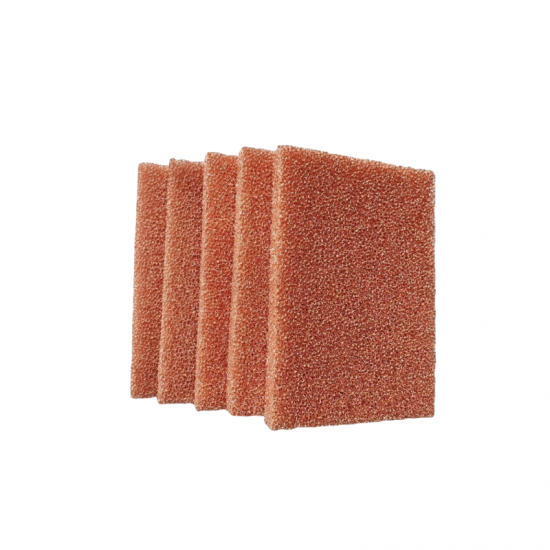
Porous copper foam is a metallic material characterized by a three-dimensional network of interconnected copper ligaments and open cells, offering a combination of high surface area, lightweight structure, and excellent functional performance. Unlike solid copper sheets or meshes, porous copper foam integrates the intrinsic properties of copper—such as high electrical and thermal conductivity—with a porous architecture, enabling superior heat transfer, fluid flow, and electrochemical activity. This versatile material is widely utilized in energy storage, thermal management, catalysis, filtration, and electronics. The growing demand for efficient, durable, and multifunctional materials in advanced industries has positioned porous copper foam as a key solution for modern technological challenges.
Material Characteristics and Properties
The defining feature of porous copper foam is its high porosity, typically ranging from 70% to over 98%, which provides a large specific surface area while maintaining structural integrity. The open-cell structure allows efficient fluid and gas penetration, making it ideal for applications requiring heat dissipation, mass transfer, or electrochemical interactions.
Electrical conductivity is another significant property of porous copper foam. The continuous metallic network ensures minimal resistance, enabling its use as a current collector in batteries, supercapacitors, and other electrochemical devices. In addition, porous copper foam exhibits outstanding thermal conductivity, facilitating rapid heat transfer and temperature uniformity in thermal management systems.
Mechanically, porous copper foam combines moderate compressive strength with energy absorption capacity, providing vibration damping and impact resistance. The material is chemically stable and corrosion-resistant in many environments, which ensures reliable long-term performance in harsh industrial conditions.
Manufacturing and Processing Technology
Porous copper foam can be produced using a variety of techniques, each influencing structural uniformity, pore size, and cost. One of the most widely used methods is the polymer template replication process. In this approach, a polymer foam is coated with copper through electroplating or chemical deposition, and the polymer template is later removed by thermal decomposition, leaving a highly porous metallic framework.
Another common method is powder metallurgy, where copper powder is combined with space-holding agents, compacted, and sintered at high temperatures. After sintering, the space-holding materials are removed to create a uniform porous structure. Advanced approaches such as electrodeposition, additive manufacturing, and gas entrapment techniques allow for precise control over pore architecture, density, and surface properties.
Post-processing steps, including surface treatment, machining, and coating, enable customization of the porous copper foam to meet specific performance requirements, such as enhanced corrosion resistance, increased conductivity, or integration with active materials in energy devices.
New Energy Material
Applications in Key Industries
Porous copper foam is extensively used in energy storage systems. In lithium-ion, sodium-ion, and metal-air batteries, it serves as a lightweight current collector and electrode scaffold, enhancing electron transport, facilitating ion diffusion, and improving electrode utilization. In supercapacitors, its high surface area allows the deposition of active materials for improved energy and power density.
In thermal management applications, porous copper foam is employed as heat exchangers, heat sinks, and cooling plates. Its combination of high thermal conductivity and open-cell structure promotes efficient heat dissipation and uniform temperature distribution, outperforming conventional solid copper components in many high-power systems.
Porous copper foam also finds applications in catalysis, chemical processing, and filtration. Its large surface area and thermal stability make it an excellent support for catalysts or a medium for fluid and gas filtration. Additional applications include electromagnetic shielding, vibration damping, and lightweight structural components in aerospace and transportation industries.
Key Advantages of Porous Copper Foam
The primary advantage of porous copper foam is its unique combination of conductivity, lightweight structure, and high surface area. This multifunctionality allows it to serve simultaneously as a conductive material, thermal management component, and structural support, reducing the need for multiple materials in complex systems.
Another benefit is the design flexibility of porous copper foam. Pore size, thickness, and density can be tailored to meet specific application requirements. Its mechanical resilience and energy absorption capabilities contribute to long service life, while its chemical stability ensures reliable performance in challenging environments.
From an economic perspective, the efficiency gains enabled by porous copper foam—such as improved battery performance, enhanced heat dissipation, and reduced material usage—often outweigh the initial material cost, making it a cost-effective solution for high-performance applications.
Conclusion
Porous copper foam represents a versatile and high-performance metallic material, combining the functional properties of copper with the advantages of a three-dimensional porous structure. Its unique combination of electrical and thermal conductivity, lightweight design, and high surface area makes it suitable for energy storage, thermal management, catalysis, and industrial filtration. As industries continue to prioritize efficiency, durability, and multifunctionality, porous copper foam is poised to play a critical role in the development of next-generation materials and systems.
Previous :
Copper Metal FoamNext :
Copper Foam Price